
AI Pedestrian Detection Camera for Forklifts: Detection Zones, Alerts and Site Testing
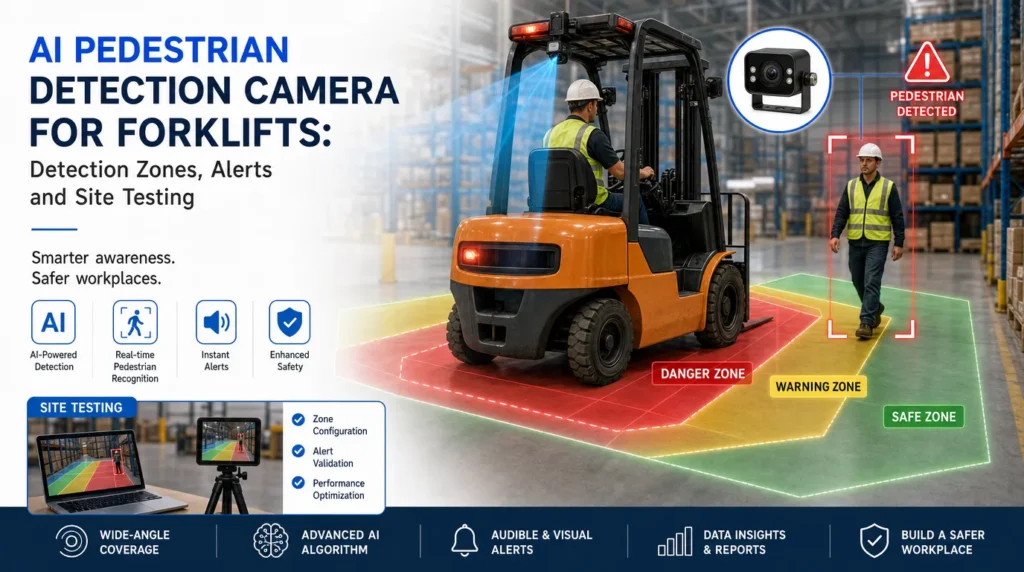
Consider a common warehouse scenario. A counterbalance forklift reverses out of an aisle. Racking stands on both sides, and a marked pedestrian walkway runs near the aisle end, outside the intended reversing path but still within the camera view. The site wants a warning if someone leaves the walkway and enters the reversing area, without repeated warnings while people remain on the designated route. Before choosing a system, three questions need to be answered: Which area should be monitored? Who needs to receive the warning? How will the proposed setup be tested under actual site conditions? An AI pedestrian detection camera for forklifts analyzes the video image to detect people […]
Forklift Camera Placement: Front, Mast, Rear & Side Views
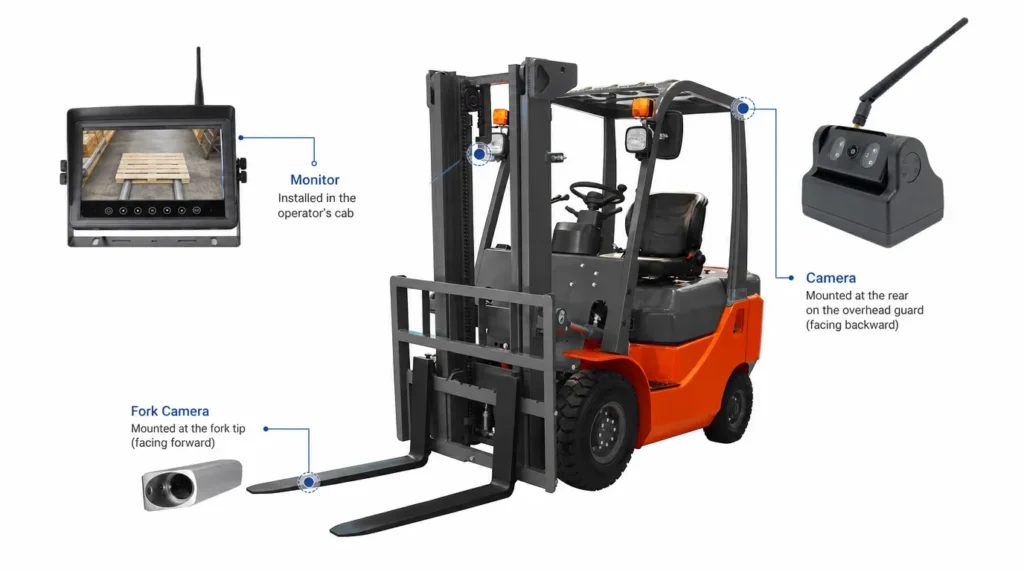
Forklift camera placement should follow the task: aligning forks with a pallet, positioning loads at height, reversing or checking side clearance. Each task calls for a different view, and one camera may not cover them all. Start with the area the operator cannot see clearly. Then choose a mounting position that keeps that area visible during normal operation, including lifting, tilting and handling loads. Camera specifications matter, but they cannot compensate for the wrong viewing angle. For fleet buyers, this means reviewing the proposed camera positions and monitor views before agreeing on the equipment list. Why Forklift Camera Placement Matters A camera may produce a sharp image yet miss the […]
Mobile DVR Storage: HDD vs SSD vs SD Card for Fleets
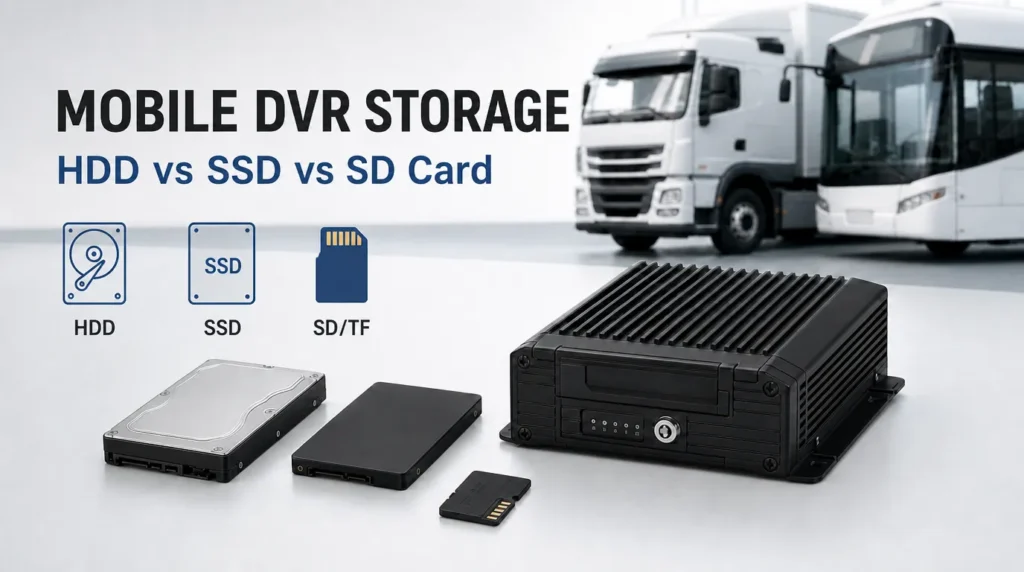
There is no single best mobile DVR storage option for every fleet. The right choice depends on camera count, channel bitrate, retention target, vehicle environment, maintenance routine and how costly missing footage would be. When fleet footage is missing, the storage device often gets the blame. Sometimes the real problem started earlier: the drive was not suited to continuous rewriting, the vehicle created too much vibration, the cabin temperature was too high, or the MDVR was fitted with a card that was never meant for loop recording. Quick answer: Choose an HDD when long retention and lower cost per gigabyte matter most, provided the recorder is mounted properly and the […]
4G Mobile DVR for Fleet Remote Monitoring: How It Works
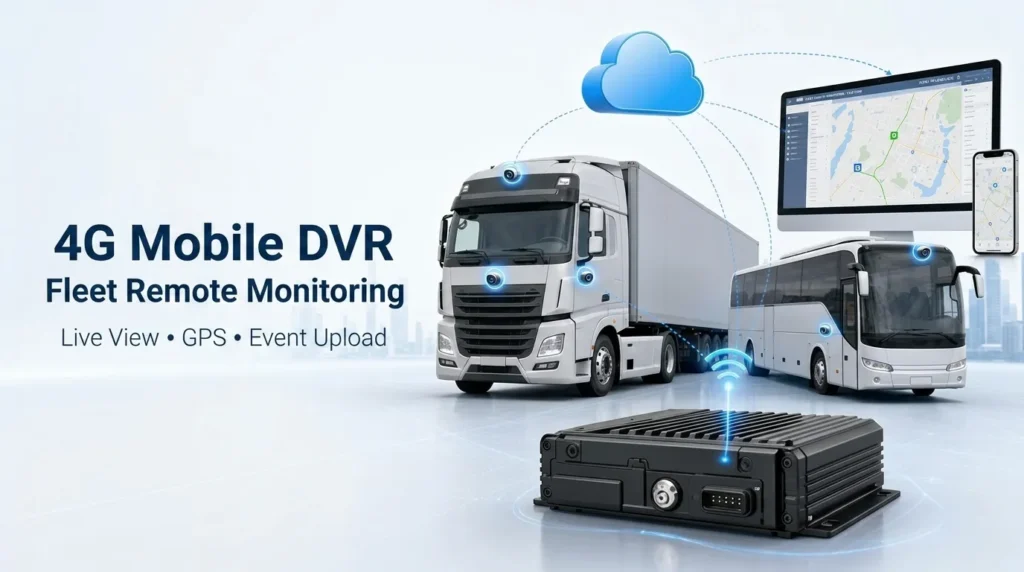
A 4G mobile DVR is often described as a cloud-connected recorder. That is useful shorthand, but it can create the wrong expectation. In most fleet installations, full-quality video is still recorded inside the vehicle. The cellular link mainly handles live viewing, GPS reporting, device status and selected alarm media. That matters when comparing quotations. The recorder may include a 4G module, while the project still needs a SIM card, antennas, a compatible CMS platform, firmware settings and a suitable data plan. This guide explains local storage, 4G transmission, outage behavior and what buyers should confirm before ordering. Quick answer: A practical fleet setup usually combines continuous local recording, on-demand live […]
8CH Mobile DVR Camera Layout for Trucks, Buses and Special Vehicles
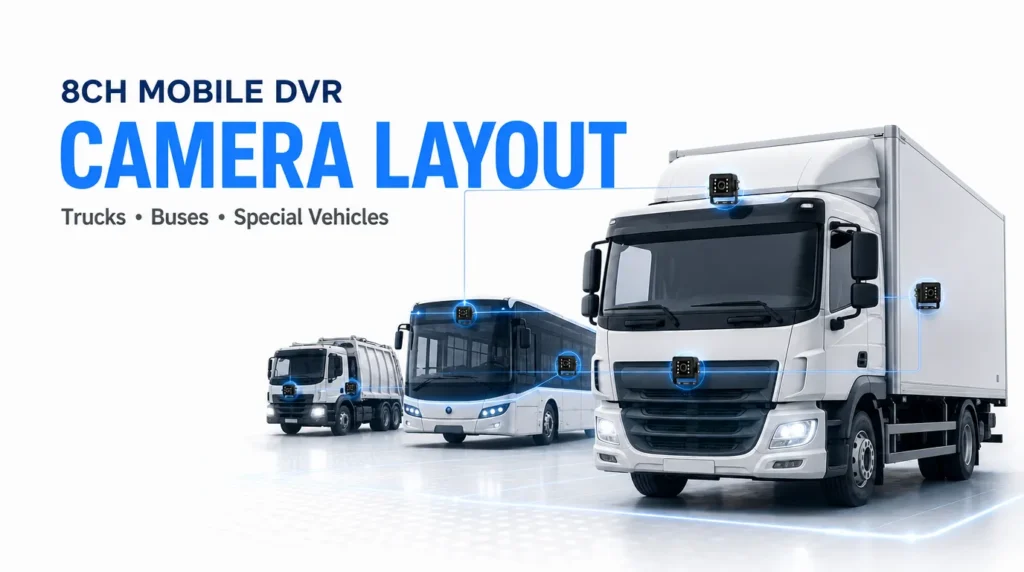
Eight channels solve a capacity problem, not a layout problem. The recorder can accept eight camera feeds, but it cannot decide whether the eighth view is better used at a cargo door, a rear corner, a passenger entrance or a lifting arm. The answer depends on the vehicle. A truck may need rear-corner and loading coverage; a bus has doors, passengers and an aisle to monitor. On a waste truck or crane, the working equipment may be the priority. A useful 8CH mobile DVR camera layout starts with the incidents and risks the fleet needs to see. Assign channels, cameras and cable lengths afterwards. The layouts below are starting points. […]
Mobile DVR Alarm Inputs, Alarm Outputs and Speaker Output Explained
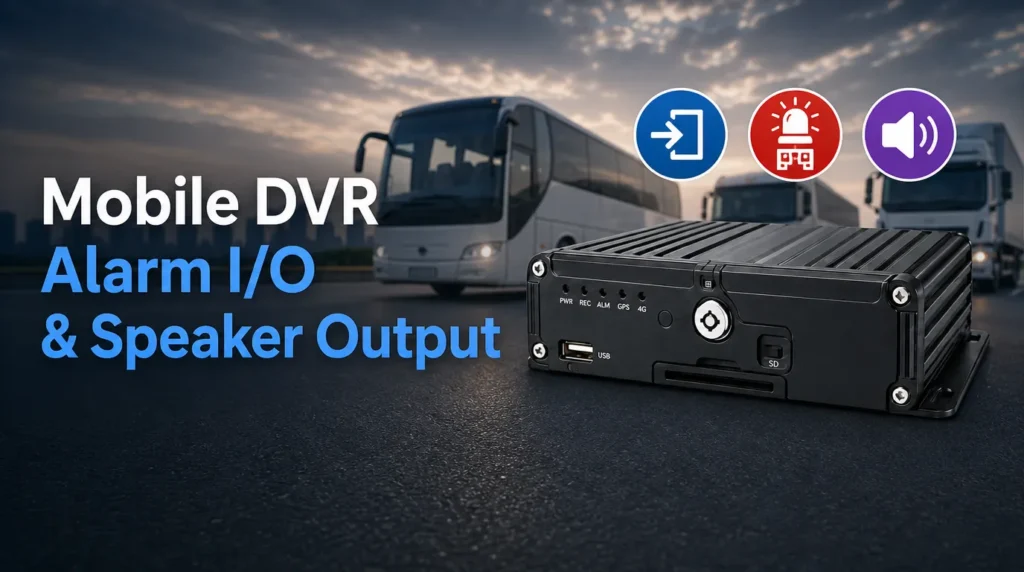
A mobile DVR alarm input is often treated as a simple on/off connection. In practice, a data-sheet entry such as “8 Alarm IN, 2 Alarm OUT and 1 Speaker Port” tells you the connector count—not which signals the interfaces accept, what happens after a trigger or which accessories are needed. That matters on installation day. A reverse signal might switch the monitor, mark the recording and notify a platform—or do only one of those things. An alarm output might control a warning light without being able to power it. A speaker port may support intercom but not prerecorded alerts. Here is how vehicle signals, recording rules, local warnings and remote […]
AI MDVR with ADAS and DMS: What Fleet Buyers Should Know
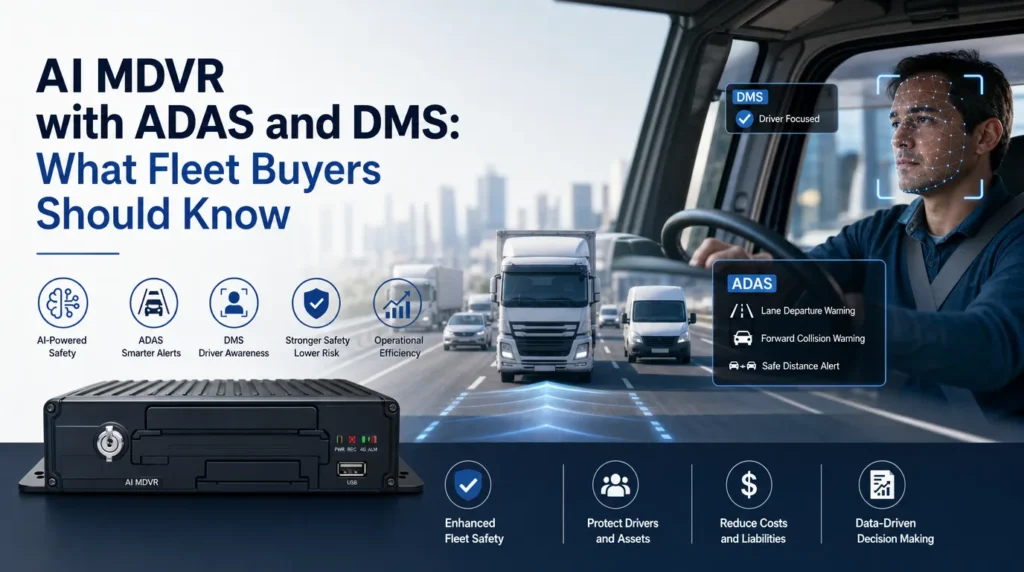
Two products can both be sold as an AI MDVR with ADAS and DMS, yet the actual quotation may look very different once you check the cameras, algorithms, driver alerts, platform features and installation work behind those words. That is where many fleet projects become confusing. A recorder may be AI-capable, but ADAS and DMS may still require separate cameras, licenses, speakers, 4G/GPS items, platform settings and calibration. So the question is not only “Does this MDVR support ADAS and DMS?” A better question is: What exactly is included in this AI MDVR system, and what still needs to be configured before the fleet can use it in daily operation? […]
Vehicle Blind Spots: Causes, Risks, and Detection Technologies

Blind spots can hide a pedestrian, cyclist, vehicle, worker, or obstacle before a driver has time to react. Vehicle blind spots are areas around a vehicle that cannot be clearly seen by the driver through direct vision, mirrors, or standard visibility aids. The best way to reduce blind spot risk is to match the right detection technology—camera systems, radar sensors, AI detection, alarms, or a combined solution—to the vehicle type, blind spot location, installation conditions, and operating environment. vehicle blind spot detection technologies for cars trucks and fleets Vehicle blind spots are not one single problem. They are different visibility challenges caused by vehicle size, body structure, mirror coverage, seating […]
Blind Spots by Vehicle Type: Cars, SUVs, Trucks, and Industrial Vehicles
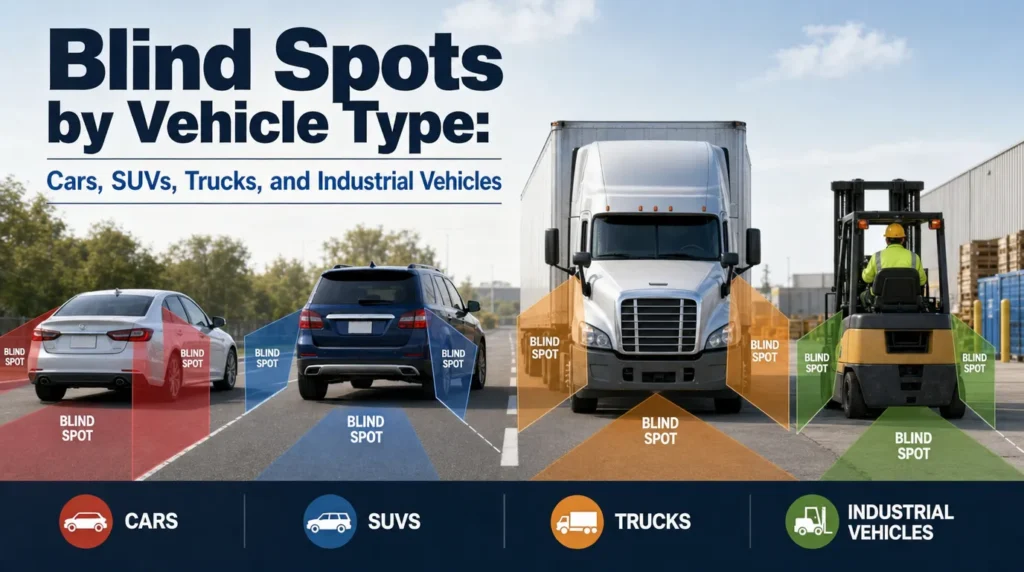
Many drivers assume blind spots are basically the same on every vehicle. That mistake can lead to the wrong detection system, poor installation choices, and avoidable safety risks. Blind spots differ by vehicle type because each vehicle has a different body shape, seating position, mirror coverage, operating environment, and visibility limit. Cars often have lane-change blind spots. SUVs add near-body visibility problems. Trucks have larger side, front, and rear blind zones. Industrial vehicles can have changing work-zone blind spots caused by loads, attachments, and site conditions. blind spots by vehicle type for cars SUVs trucks and industrial vehicles A blind spot is never just a blind spot. It belongs to […]
Commercial Vehicle Camera Systems: How Do Fleets Choose the Right Setup?
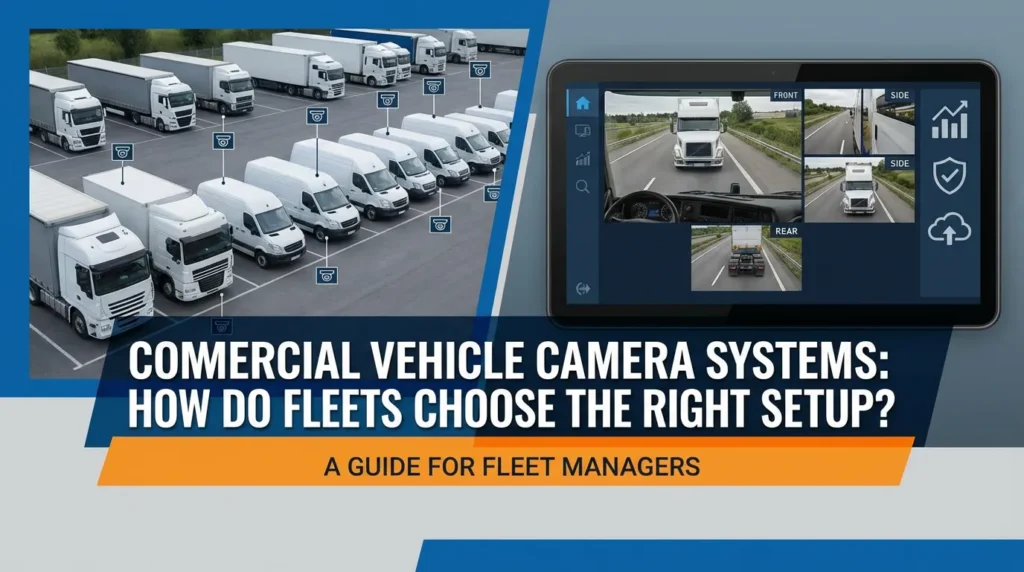
Many fleets invest in cameras, yet still struggle with blind spots, installation delays, weak uptime, and unclear compliance expectations. The problem is often not whether they use cameras, but whether they build the right system. Commercial vehicle camera systems work best when the setup matches vehicle risk, camera coverage, wiring method, installation plan, durability needs, compliance goals, and day-to-day fleet operations. The right system is not always the most complex one. It is the one that fits real use. Commercial vehicle camera systems are no longer a simple monitor-and-camera purchase. In real fleet projects, the better question is not only what product the buyer wants, but what the vehicle and […]
 Japanese
  English
  Spanish
  German
  Arabic
  Dutch
Dutch