
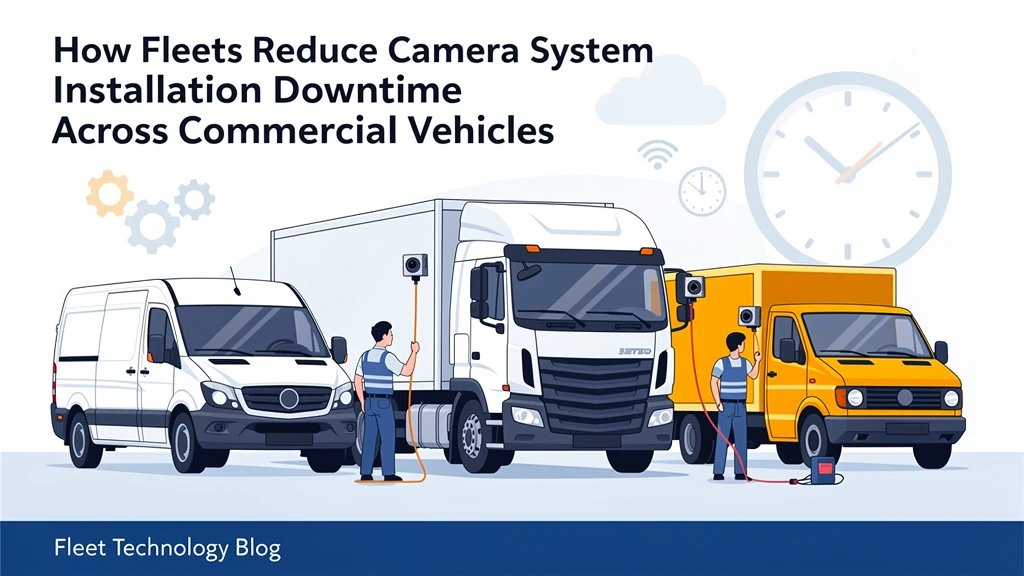
A camera system may look affordable at the quotation stage. But once vehicles sit idle, technicians spend extra hours routing cables, and rollout delays begin to affect operations, a simple upgrade can quickly become an expensive disruption.
Fleets reduce camera system installation downtime by standardizing hardware, simplifying wiring, pre-configuring kits, testing on pilot vehicles, and matching installation plans to vehicle types. The goal is not only faster fitting, but less rework, less idle time, and a smoother fleet-wide rollout.
In many commercial vehicle camera projects, product cost gets most of the attention at the start. That is understandable because buyers can compare prices, monitor size, resolution, channel count, and recording features quickly. Installation downtime is harder to see early, and that is exactly why it causes trouble later. A system that looks cheaper on paper can become more expensive once labor time, vehicle idling, rescheduling, troubleshooting, and repeat fitting are added. That is why downtime should be treated as a core selection factor, not an afterthought.
Quick Answer: How Do Fleets Reduce Camera Installation Downtime?
Fleets reduce camera installation downtime by using standardized hardware, repeatable wiring plans, pre-configured kits, pilot vehicle validation, and rollout schedules matched to actual vehicle operations. The faster projects are not always the cheapest at the start. They are usually the ones designed to be repeatable, predictable, and easier to scale.
A practical way to think about downtime reduction is this:
- standardize hardware to reduce variation
- simplify wiring and connectors to reduce fitting time
- validate on a pilot vehicle before wider rollout
- pre-configure kits to avoid solving problems on-site
- plan installation windows carefully to reduce operational disruption
Why Does Installation Downtime Matter So Much in Fleet Camera Projects?
Installation downtime matters because every extra fitting hour affects vehicle availability, labor cost, rollout speed, and operational planning. In commercial fleets, the real cost of a camera system is not only the hardware price. It also includes how long each vehicle is out of service and how much disruption the installation creates.
A fleet can usually accept the idea of a safety upgrade. What it often cannot accept is too many vehicles becoming unavailable at the wrong time. Once installation starts affecting dispatch, service schedules, or route capacity, the project becomes harder to support internally.
This is why downtime should be discussed before the first vehicle is touched. A fleet camera project is not only a purchasing decision. It is also a workflow decision. When managers fail to plan around vehicle availability, service windows, and installation repeatability, even a technically strong system can feel difficult to scale.
Downtime also has a hidden effect on internal confidence. When the first few installations take too long or create too much confusion, the whole rollout begins to feel risky. Teams become more cautious, approval slows down, and momentum is lost. Reducing downtime is not only about saving workshop hours. It is also about making the project easier to continue.
If the fleet is still evaluating which system architecture is most suitable before rollout begins, this topic connects closely to a broader fleet camera system selection guide.
| Downtime factor | Why it matters |
|---|---|
| Vehicle idle time | Reduces usable fleet capacity |
| Labor hours | Increases total installation cost |
| Repeat visits | Creates extra disruption and scheduling difficulty |
| Rollout delays | Slows safety improvement across the fleet |
| Internal confidence | Affects whether the project expands smoothly |
What Usually Causes Camera System Installation Delays?
Camera system installation delays are usually caused by poor wiring planning, inconsistent vehicle layouts, connector mismatches, unclear camera placement, missing pre-configuration, and lack of pilot testing before wider rollout.
In most projects, delays do not come from one major mistake. They come from several small planning gaps. One of the biggest is assuming that all vehicles in a fleet are basically the same. On paper they may belong to one group, but in practice they can have different cabin trim, body structure, electrical layouts, mirror arrangements, or rear body designs. These details affect cable routing, bracket choice, and monitor mounting more than many people expect.
Another common problem is incomplete kit definition. If the team has not fully decided which connector type, cable length, monitor mount, and camera position will be used, installers end up solving the problem on the vehicle. That always takes longer. A system that is still being figured out during installation will almost always create unnecessary downtime.
Poor communication between buyer, supplier, and installer also creates hidden delay. The supplier may understand the product but not the vehicle body. The installer may understand the vehicle but not the recording logic. The fleet manager may know the operational problem but not the technical limits. If these views are not aligned early, the rollout loses time later.
The reason pilot installations matter so much is simple: they expose these gaps before they repeat across multiple vehicles. If connector selection is still under discussion, fleets should also review a dedicated commercial vehicle camera wiring guide before rollout starts.
| Common delay source | Result on the project |
|---|---|
| Vehicle-to-vehicle variation | Slower fitting and more adjustment |
| Connector or harness mismatch | Rework and troubleshooting |
| Unclear camera position plan | Extra drilling, remounting, and retesting |
| No pilot validation | Problems repeat across multiple vehicles |
| Missing pre-configuration | More work on-site |
How Does Standardization Help Reduce Installation Downtime?
Standardization reduces installation downtime by making hardware, wiring paths, mounting positions, and installation steps more consistent across vehicles. The more repeatable the system is, the faster technicians can install it with fewer errors and less rework.
A fleet rollout becomes slow when every vehicle is treated like a special case. It becomes faster when repeated installation work is turned into a repeatable process.
Standardization does not mean forcing one identical setup onto every vehicle regardless of fit. It means creating controlled installation templates. A fleet may use one standard for light vans, one for rigid trucks, and one for larger specialist vehicles. That is still standardization, because each group follows a repeatable plan.
This makes a major difference in the field. Installers work faster when the same channel logic, harness layout, connector family, and camera positions repeat from vehicle to vehicle. The chance of mistakes falls. Spare part planning becomes easier. Documentation improves. Troubleshooting also becomes simpler because the system no longer changes every time.
Standardization also helps suppliers support the fleet more effectively. Once the product set is fixed, the supplier can prepare more accurate kits and clearer guidance. Without that, every shipment can become a partial custom project. That may sound flexible, but it usually creates more labor and more delay.
The real value of standardization is not only speed. It is predictability. In fleet projects, predictability often matters more than the shortest single installation time.
| Standardized element | Downtime benefit |
|---|---|
| Fixed connector family | Less compatibility confusion |
| Defined cable lengths | Faster routing and fewer on-site changes |
| Repeated camera positions | Quicker mounting and angle setup |
| Vehicle group templates | Easier scaling across the fleet |
| Shared install documentation | Fewer technician errors |
Why Do Pre-Configured Kits and Pilot Vehicles Save So Much Time?
Pre-configured kits and pilot vehicles save time because they move problem-solving forward. Instead of discovering issues during large-scale installation, the fleet resolves connector, bracket, cable, and placement questions on a controlled early vehicle and then repeats the proven setup.
A pilot vehicle is not only for checking whether the image appears on screen. It is for validating the whole installation process. How long does the install really take? Which harness route works best? Is the side camera angle correct? Does the rear cable need more protection? Is the monitor position acceptable for the driver? These are rollout questions, not just product questions.
Once a pilot is completed properly, the fleet can turn those lessons into a better installation kit. That may include labeled cables, matched connectors, fixed mounting parts, and a defined installation sequence. These small improvements shorten every later installation.
Pre-configuration matters for the same reason. If recorder settings, camera assignments, trigger logic, and cable matching are prepared before the vehicle reaches the installer, the on-site job becomes much smoother. The technician can focus on fitting rather than basic system setup.
This is one of the clearest ways to reduce downtime without sacrificing quality. The fleet does not rush the work. It removes uncertainty before the work begins.
| Rollout tool | Why it saves time |
|---|---|
| Pilot vehicle | Finds issues before full rollout |
| Pre-labeled harness | Reduces wiring confusion |
| Pre-matched connectors | Cuts troubleshooting time |
| Fixed mounting kit | Speeds repeat installation |
| Defined setup checklist | Improves consistency |
How Should Fleets Plan Rollout to Minimize Vehicle Downtime?
To minimize downtime, fleets should group vehicles by type, schedule installations around low-impact operating windows, use tested installation templates, and avoid changing hardware decisions during rollout. Good planning reduces disruption just as much as it reduces labor hours.
A camera rollout becomes easier to support when installation is planned around operations rather than forced against them. The best rollout is usually the one that fits the fleet’s working rhythm.
Not every vehicle needs to be upgraded in the same way or at the same speed. Fleets should first identify which vehicles share the same body type, duty cycle, and safety risk. Then each group can be assigned an installation plan that matches real operating conditions.
Scheduling also matters. Some fleets can release vehicles only during narrow maintenance windows. Others can rotate units through workshop time more easily. A rollout plan should respect that. If the schedule ignores operations, even a good technical plan will create tension.
Fleets should also avoid mid-rollout product drift. Once the connector, camera, and recorder approach is validated, changing parts too often creates new delay. Each change resets learning and increases the risk of inconsistency. It is better to refine early through a pilot and then stay disciplined during the rollout.
In the end, the fastest rollout is not always the one with the most installers. It is often the one with the fewest surprises. That is why planning, standardization, and early validation matter so much in commercial vehicle camera projects.
| Rollout practice | Result |
|---|---|
| Group vehicles by similar type | Easier repeat installation |
| Install during low-impact windows | Less operational disruption |
| Use pilot-based templates | Fewer rollout surprises |
| Keep hardware choices stable | Better consistency |
| Coordinate supplier and installer early | Less confusion and delay |
Common Mistakes Fleets Make When Trying to Speed Up Installation
The most common mistake is trying to save time by skipping preparation. In most fleet projects, that creates more delay later.
Other common mistakes include:
- rushing into rollout without a pilot vehicle
- treating mixed vehicle types as one identical installation group
- leaving connector, cable, or bracket decisions unresolved
- changing hardware during rollout
- focusing on hardware price while ignoring labor and idle-time cost
The fastest-looking plan at the start is not always the most efficient plan overall. In fleet installations, time is usually saved through preparation, repeatability, and disciplined rollout control.
結論
Installation downtime is not a side issue in fleet camera projects. It is one of the main cost, rollout, and operational planning factors.
Fleets reduce downtime when they standardize hardware, validate early, pre-configure kits, and schedule installation around real vehicle operations. In practice, the smoothest projects are usually not the cheapest-looking ones. They are the ones designed to be repeatable.
FAQ
How do fleets reduce camera installation downtime?
Fleets reduce camera installation downtime by standardizing hardware, simplifying wiring, using pilot vehicles, pre-configuring kits, and planning installations around real operating windows.
What causes delays in fleet camera system installation?
Common causes include poor wiring planning, vehicle-to-vehicle variation, connector mismatch, unclear camera placement, missing pre-configuration, and skipping pilot validation.
Why are pilot vehicles important in camera system rollout?
Pilot vehicles help fleets test the full installation process before wider rollout. They reveal routing, mounting, and configuration issues early, which prevents repeat problems across multiple vehicles.
How does standardization reduce downtime?
Standardization reduces downtime by making hardware, wiring paths, connector choices, and installation steps more repeatable. That helps technicians work faster with fewer mistakes and less rework.
Is the cheapest camera system always the fastest to install?
No. A lower-cost system can create more downtime if it requires more routing changes, troubleshooting, repeat visits, or inconsistent installation work across vehicles.

 Japanese
  English
  Spanish
  German
  Arabic
  Dutch
Dutch