
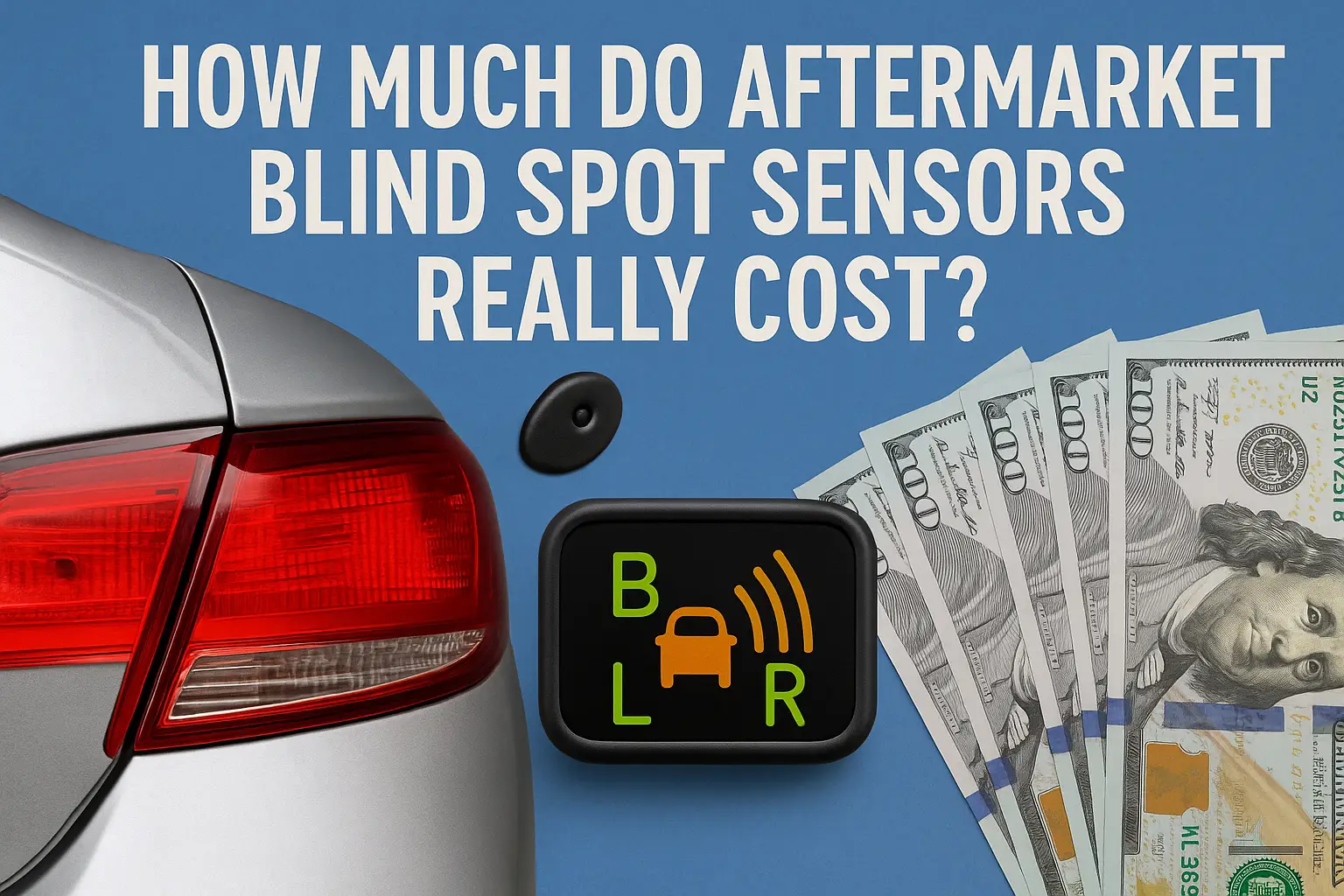
Quick Answer: How Much Do Aftermarket Blind Spot Sensors Cost?
Aftermarket blind spot sensors usually cost $450 to $1,000 including professional installation.
A typical breakdown is:
- Sensor kit: $250–$500
- Installation: $200–$500
- Total installed system: $450–$1,000
The final cost depends on sensor type, vehicle size, installation complexity, and system requirements.
For commercial vehicles such as trucks, vans, buses, forklifts, and fleet vehicles, pricing can vary further due to longer wiring needs, stronger waterproof requirements, and more complex installation layouts.
Aftermarket Blind Spot Sensor Cost Breakdown
| Cost Item | Typical Price Range | Description |
|---|---|---|
| Ultrasonic sensor kit | $150–$250 | Short-range detection, low-speed warning |
| Radar blind spot sensor kit | $300–$500+ | Long-range detection, lane-change support |
| Professional installation | $200–$500 | Wiring, mounting, calibration, testing |
| Total installed system | $450–$1,000 | Most passenger vehicle systems |
| Fleet / commercial project | Project-based | Depends on vehicle type and configuration |
Need a blind spot detection solution for trucks, vans, forklifts, buses, or fleet vehicles?
Tell us your vehicle type, quantity, detection area, and warning requirements. Our team can help suggest a suitable radar, ultrasonic, camera, or AI detection solution.
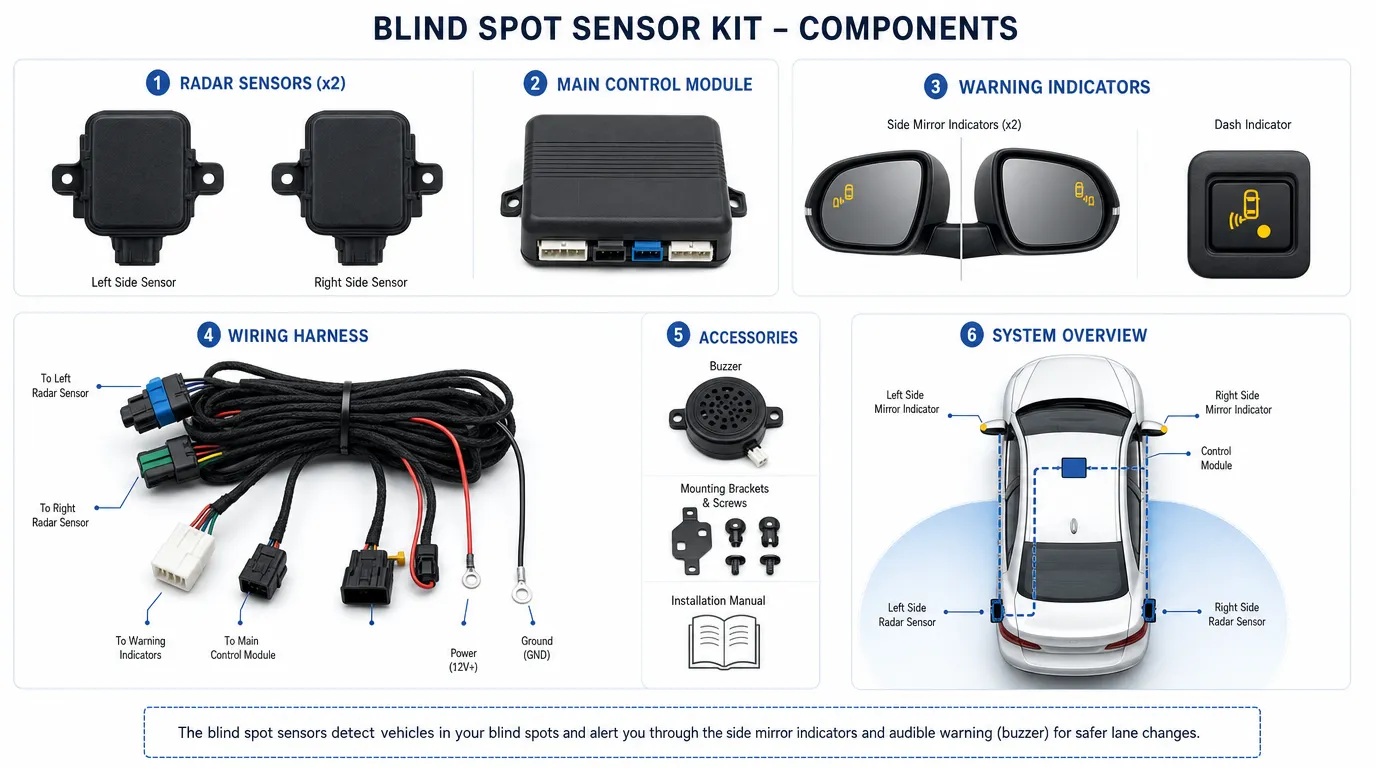
What Determines the Cost of Aftermarket Blind Spot Sensors?
The cost is mainly affected by:
1. Sensor Technology
Radar systems cost more than ultrasonic systems due to longer range and higher accuracy.
2. Detection Performance
Longer detection distance and lower false alarm rate increase system cost.
3. Warning Method
Buzzer, LED indicator, monitor integration, or CAN/relay output all affect cost.
4. Vehicle Type
Trucks, forklifts, and buses require more complex installation than passenger cars.
5. Installation Complexity
Cable routing, sensor placement, and calibration directly affect labor cost.
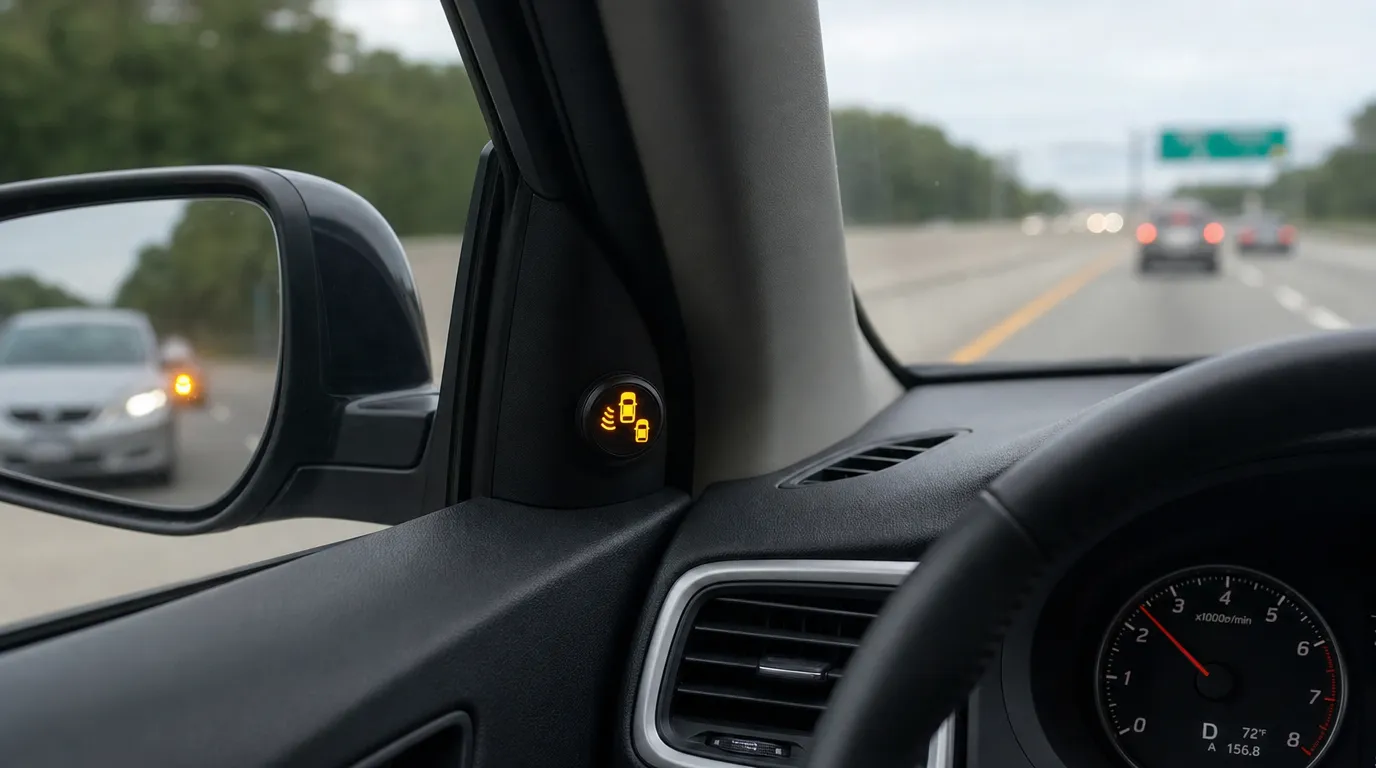
Radar vs Ultrasonic Blind Spot Sensor Cost
Ultrasonic Blind Spot Sensors
Ultrasonic sensors are typically used for short-range detection such as parking assistance, reversing warning, and low-speed obstacle detection.
They are suitable for forklifts, warehouse vehicles, and other equipment operating in tight spaces.
For low-speed reversing and close-range obstacle detection, an ultrasonic radar detection system for commercial vehicles can be a practical option.
Best for:
- Parking support
- Low-speed operation
- Forklifts and warehouse vehicles
- Close-range obstacle detection
Radar Blind Spot Sensors
Radar systems provide longer range and better stability, especially in real traffic conditions.
Best for:
- Lane-change warning
- Highway driving
- Trucks and vans
- Fleet safety systems
- Outdoor environments
| Feature | Radar | Ultrasonic |
|---|---|---|
| Cost | Higher | Lower |
| レンジ | Long | Short |
| Speed use | High-speed capable | Low-speed only |
| Stability | Strong | Medium |
| Use case | Trucks / fleet | Parking / forklifts |
Blind Spot Sensor Installation Cost (Why It Adds $200–$500)
Installation is a major part of total cost because it includes:
- Bumper or trim disassembly
- Sensor positioning measurement
- Wiring and routing
- Power connection
- Warning system setup
- Calibration and testing
Incorrect installation may cause:
- False alerts
- Missed detection
- Water ingress
- System instability
Blind Spot Sensor Cost by Vehicle Type
Passenger Cars
Easier installation, lower cost range.
SUVs and Vans
Moderate installation complexity, slightly higher cost.
Trucks and Commercial Vehicles
Higher cost due to:
- Larger blind spots
- Longer cable routing
- Stronger durability requirements
- Multi-point detection needs
Forklifts and Industrial Vehicles
Focused on low-speed safety in tight environments.
Often combined with:
- Ultrasonic sensors
- AI camera systems
- Warning light/buzzer systems
Passenger Vehicles vs Fleet Projects
The $450–$1,000 range mainly applies to individual vehicles.
For fleet and commercial applications, cost depends on:
- Number of vehicles
- Vehicle types
- Detection zones required
- Wiring and installation standardization
- Waterproof and durability requirements
- Integration with other safety systems
Fleet systems prioritize consistency and reliability, not just unit price.
Are Cheap Blind Spot Sensors Worth It?
Low-cost systems may work for:
- Basic parking assistance
- Low-speed warning
- Light-duty usage
However, they may not be suitable for:
- Highway lane-change detection
- Commercial fleet operation
- Harsh environments
- High-frequency usage
Common issues with low-cost systems:
- Limited detection range
- Higher false alarms
- Lower durability
- Inconsistent performance
Aftermarket Blind Spot Sensors for Trucks, Vans & Fleets
For commercial vehicles, blind spot safety systems may include:
- Radar blind spot detection systems
- Ultrasonic obstacle detection systems
- Rear/side view camera systems
- AI pedestrian detection cameras
- Combined sensor + camera solutions
For pedestrian or vehicle recognition around blind spots, an AI blind spot detection camera system may be more suitable.
For drivers who need visual confirmation, backup cameras for commercial vehicles can be combined with sensors to improve rear or side visibility.
System selection depends on vehicle type, operating speed, detection area, and working environment.
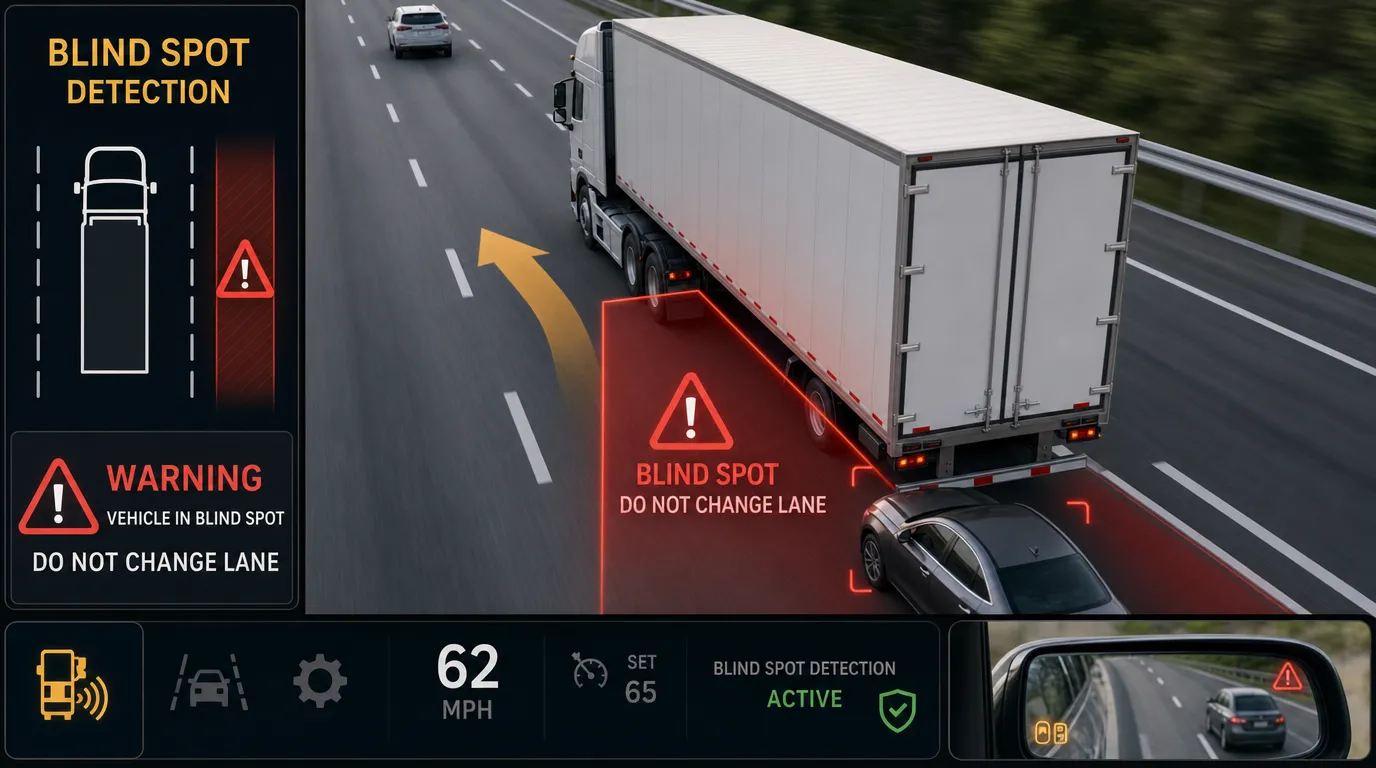
System selection depends on:
- Vehicle type
- Operating speed
- Detection area
- Safety requirements
- Environment conditions
How to Choose the Right Blind Spot Sensor System
Before choosing a system, confirm:
| Question | Why It Matters |
|---|---|
| Vehicle type | Determines system layout |
| Detection area | Side, rear, or full surround |
| Operating speed | Affects sensor type |
| Warning method | Visual, sound, or integrated |
| Environment | Indoor vs outdoor durability |
| Project size | Single unit vs fleet deployment |
Need a Blind Spot Detection Solution for Commercial Vehicles?
If you are evaluating blind spot sensor systems for trucks, vans, forklifts, buses, or fleet vehicles, we can help you choose the right configuration.
We can support:
- System selection
- Sensor type recommendation
- Installation planning
- Fleet deployment solutions
- OEM / retrofit projects
If you are not sure which system fits your project, you can request a blind spot detection solution based on your vehicle type, quantity, and detection requirements.
FAQ
How much does it cost to install blind spot sensors?
Most systems cost $450–$1,000 installed, including kit and professional installation.
Are radar sensors more expensive than ultrasonic sensors?
Yes, radar systems are more expensive but provide better range and stability.
Can blind spot sensors be used on trucks?
Yes. Trucks often require radar-based or hybrid systems for better coverage.
Do installation costs vary by vehicle type?
Yes. Larger and commercial vehicles usually cost more to install.
Are cheap blind spot sensors reliable?
They may work for basic use, but are less reliable for commercial or highway applications.
結論
Aftermarket blind spot sensors typically cost $450–$1,000 installed, but real pricing depends on:
- Sensor technology
- Vehicle type
- Installation complexity
- System requirements
For commercial vehicles, choosing the right system is more important than choosing the lowest price.
A properly designed blind spot detection system can significantly improve safety and reduce accident risk in daily operation.

 Japanese
  English
  Spanish
  German
  Arabic
  Dutch
Dutch