
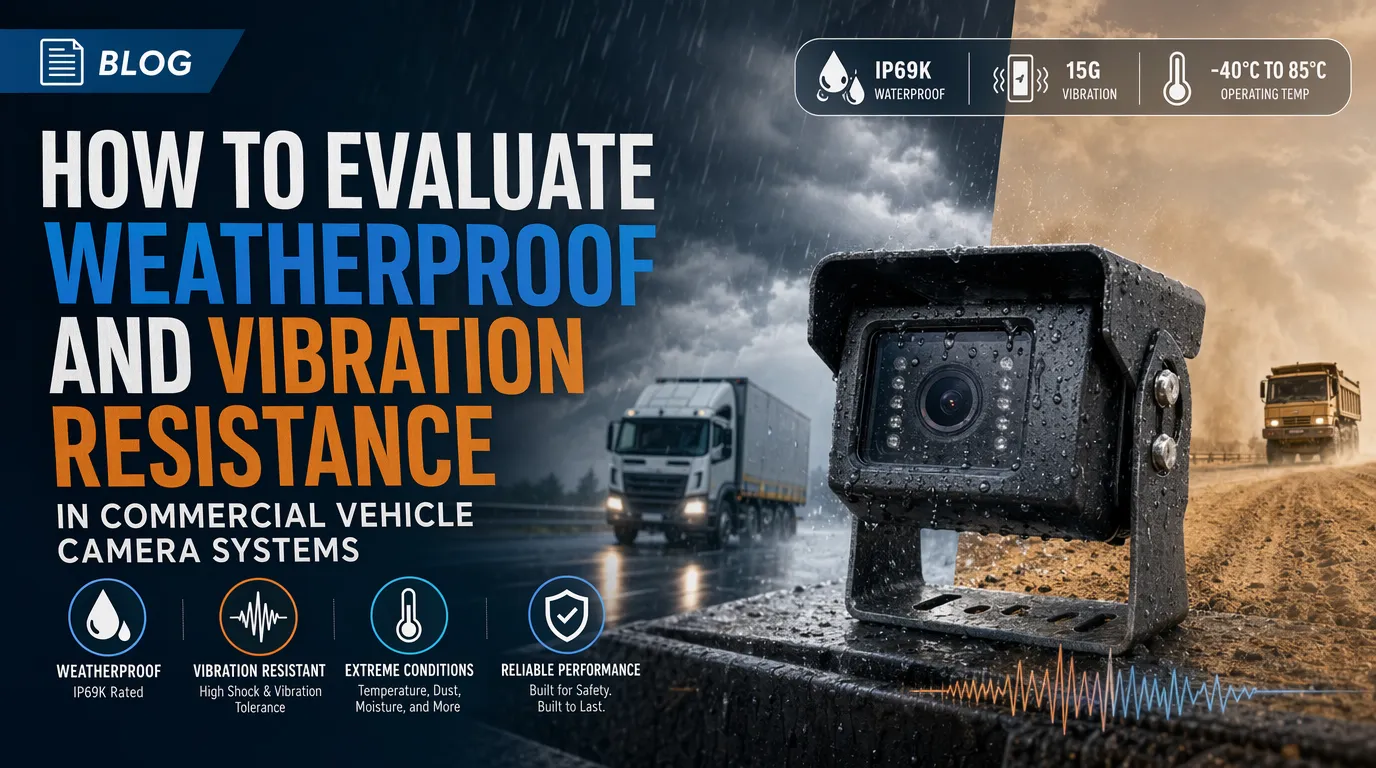
A camera system can look rugged on a datasheet, then fail after water spray, road shock, constant vibration, or repeated outdoor use. Many fleet problems begin when buyers trust a rating but do not question the full durability story.
To evaluate weatherproof and vibration resistance in commercial vehicle camera systems, you need to look beyond IP ratings and check housing design, connector sealing, cable routing, mounting stability, test logic, and real operating conditions. A durable system is not only sealed. It also has to remain stable under daily vehicle stress.
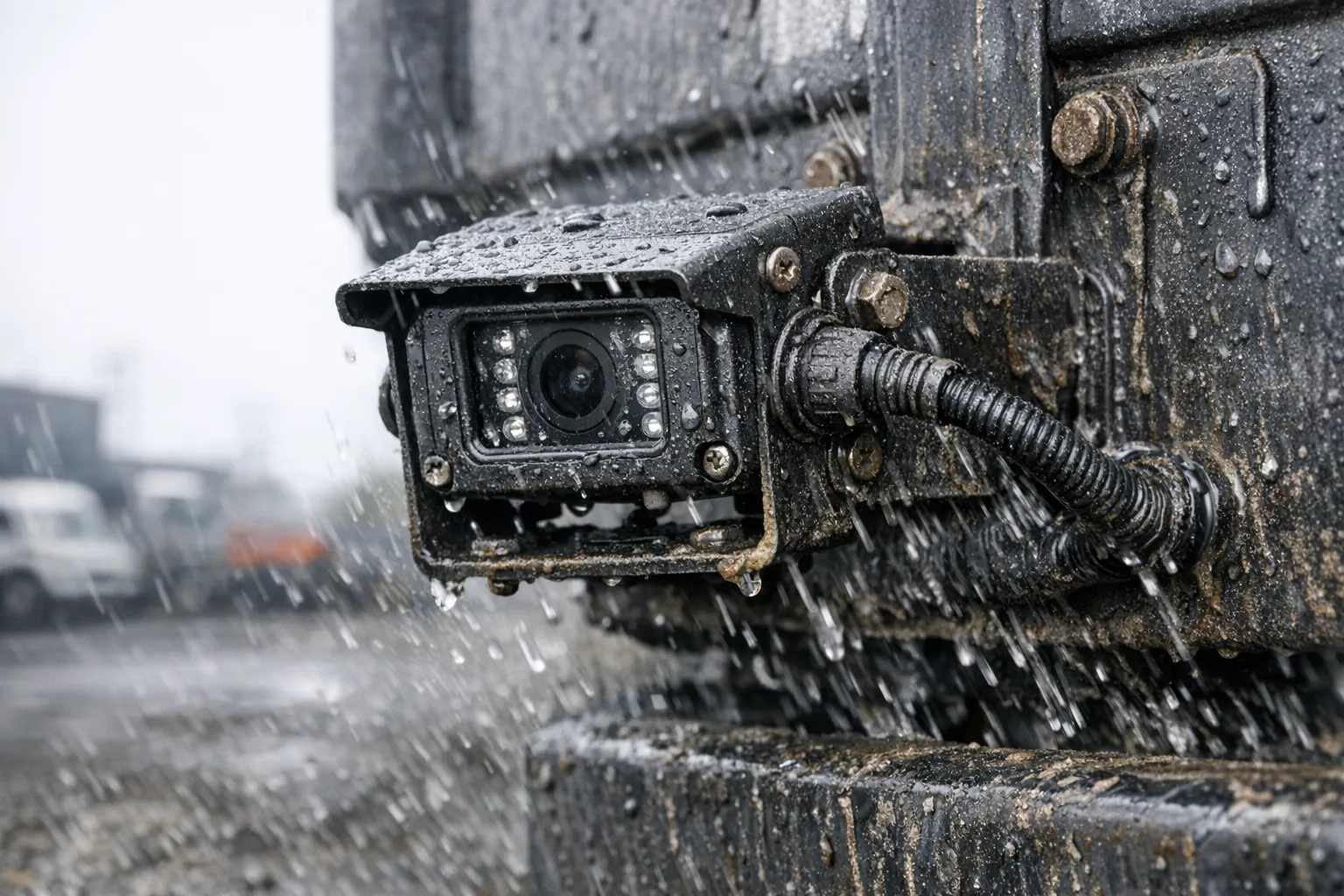
When evaluating commercial vehicle camera products, durability should not be treated as one isolated feature. It is a chain. The housing matters. The connector matters. The cable path matters. The bracket matters. The mounting point matters too. A camera may have a strong lens window and a good sealing claim, but if the connector loosens, the cable wears through, or vibration shifts the angle over time, the whole system still fails in real use. That is why weatherproofing and vibration resistance should be judged as system-level reliability, not as isolated spec-sheet items.
Quick Answer: How Should You Evaluate Camera Durability for Fleet Use?
The best way to evaluate weatherproof and vibration resistance is to assess the full installed system, not just the camera body. That means checking IP rating, connector protection, cable entry sealing, bracket design, mounting stability, routing path, and how the system behaves under real commercial vehicle conditions.
A practical way to think about durability is this:
- IP rating gives a starting point, not the full answer
- connectors and cable entries are often the real weak points
- brackets and mounting hardware decide long-term stability
- routing and strain relief affect field life more than many buyers expect
- real fleet conditions matter more than one headline test number
Why Are Weatherproofing and Vibration Resistance So Important in Commercial Vehicle Camera Systems?
Weatherproofing and vibration resistance matter because commercial vehicles expose cameras to rain, washdown, dirt, road spray, UV, temperature change, shock, and constant movement. If the system cannot handle those conditions over time, reliability drops even when the image quality looked good at the start.
Commercial vehicle camera systems do not operate like light-duty consumer electronics. A fleet truck, bus, waste vehicle, municipal vehicle, or industrial support vehicle may run for long hours, remain exposed through changing weather, and work through repeated service cycles with very little rest. That creates stress a basic light-duty design may not survive well.
Failures in this area are often frustrating because they seem random at first. One day the image flickers. Another day a connector shows corrosion. Another time the bracket loosens and the camera view drifts. These failures are not always dramatic, but they create repeat service calls, increase maintenance pressure, and reduce driver confidence in the system.
That is why the real question is not only whether the camera works when new. It is whether it keeps working after months of vibration, wet conditions, road spray, and outdoor exposure. In fleet applications, that is the durability standard that matters.
If the fleet is still choosing the right hardware platform before comparing durability details, this topic also connects naturally to a broader fleet camera system selection guide.
| Durability factor | Why it matters in fleets |
|---|---|
| Rain and road spray | Can affect sealing and long-term corrosion |
| Washdown exposure | Increases pressure on housing and connectors |
| Constant vibration | Can loosen mounts and damage internal stability |
| Dirt and mud | Can block the lens and affect cable areas |
| Temperature shifts | Can stress seals, materials, and internal electronics |
| Long duty cycles | Increase wear across the full system |
Why Is an IP Rating Useful but Not Enough on Its Own?
An IP rating is useful because it gives a basic reference for resistance to dust and water ingress. But it is not enough on its own because it does not fully describe long-term durability, connector reliability, cable sealing, vibration stability, or how the product performs after repeated real-world exposure.
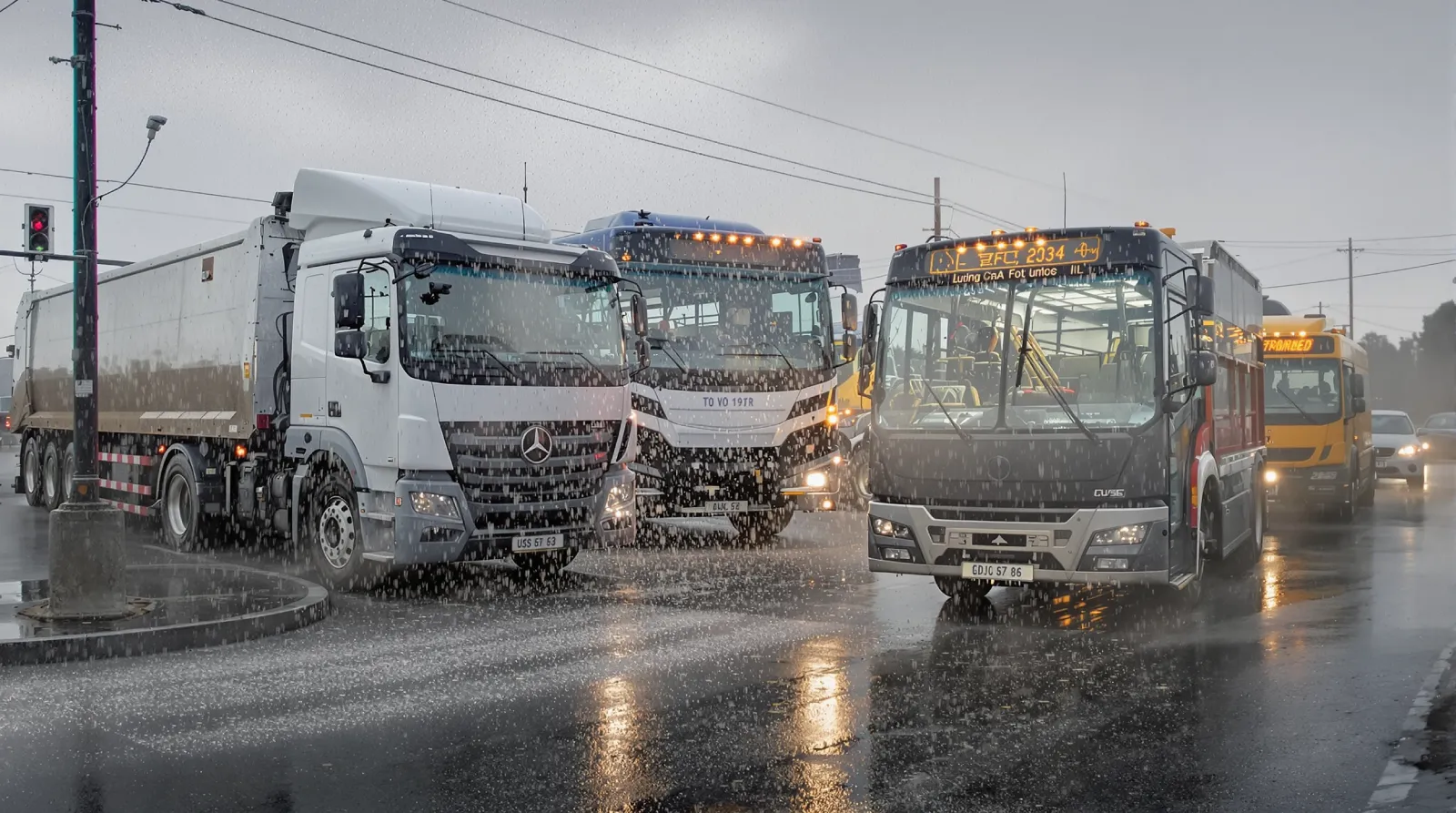
IP ratings are often misunderstood because they are easy to compare. One camera says IP67. Another says IP69K. That makes it tempting to assume the higher number answers the whole durability question. In practice, it only answers part of it. The rating says something about water and dust protection under defined test logic, but it does not fully explain how the camera system behaves once mounted on a working vehicle.
For example, a camera housing may be well sealed, but the connector area may still become the weak point. A cable entry may look fine at first but degrade over time. A bracket may meet water-related expectations but still allow vibration to affect image stability. That is why IP should be treated as the starting point of the durability discussion, not the final answer.
Buyers should also ask whether the stated protection level applies only to the camera body or to the full installed condition. That difference matters. In some products, the lens section may be highly sealed, but the complete assembly with connector and cable routing needs more careful explanation.
| What an IP rating helps with | What it does not fully answer |
|---|---|
| Basic dust protection level | Long-term cable durability |
| Basic water ingress protection | Vibration resistance |
| General sealing reference | Mount stability over time |
| Product comparison starting point | Real fleet life under repeated use |
What Parts of the Camera System Usually Become the Real Weak Points?
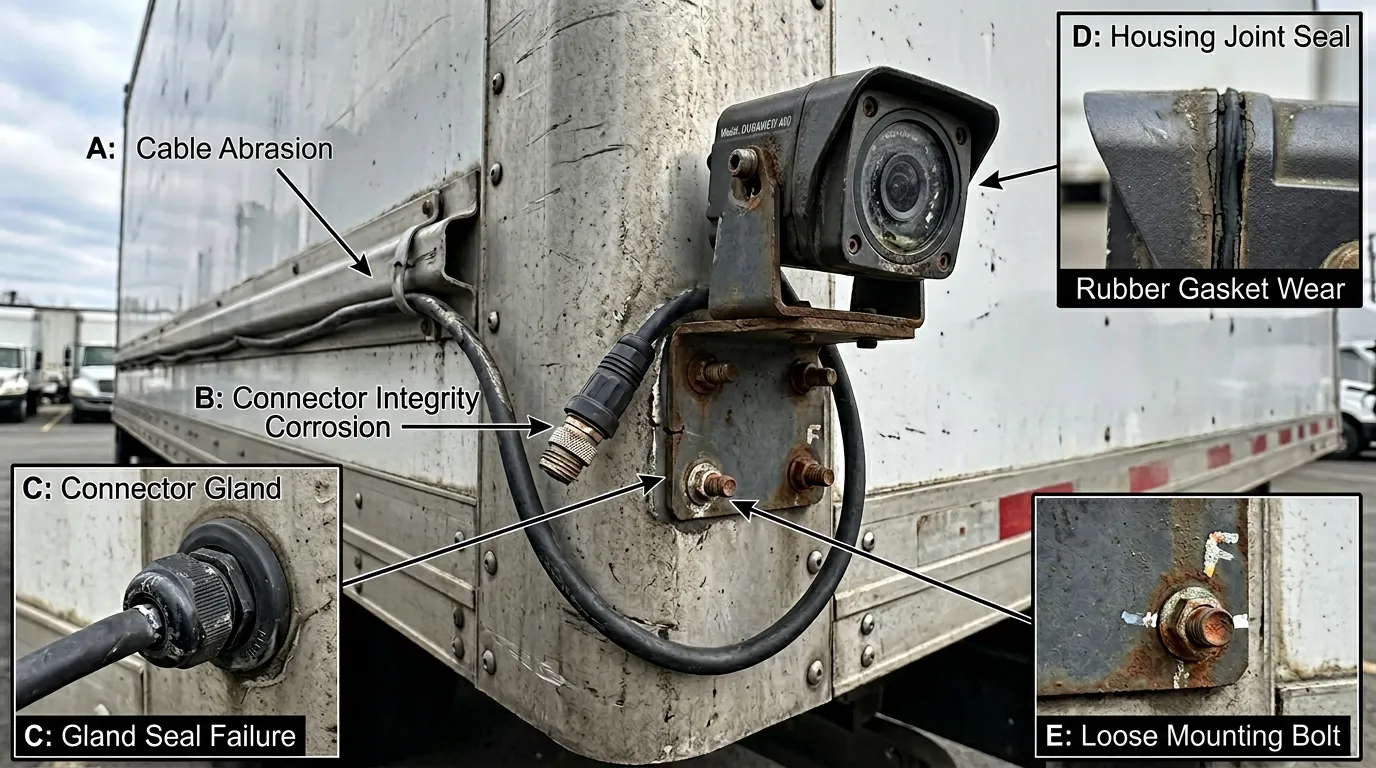
The real weak points in commercial vehicle camera systems are often the connector, cable entry, bracket, mounting hardware, housing joint, and routing path. These are the areas where water, vibration, corrosion, and movement stress usually appear first.
A strong housing does not help enough if the connector is exposed and unstable. A sealed lens window does not solve much if the bracket slowly shifts under vibration. A well-rated product may still suffer if the cable bends sharply at a stress point or rubs against a rough edge over time. This is why system-level evaluation matters so much in fleet work.
Commercial vehicles create repeated stress in predictable places. Mounting points move. Rear zones collect spray and dirt. Side positions may be exposed to impact. External cable paths face wear from vibration, heat, and movement. These are not unusual exceptions. They are normal fleet conditions.
Weak-point analysis also helps buyers ask better questions. Instead of asking only for the IP level, they can ask how the cable is sealed, how the connector is protected, how the bracket resists loosening, and what strain relief is used. If connector reliability is still under review, a separate commercial vehicle camera wiring guide can help support the durability discussion.
| Common weak point | Typical risk |
|---|---|
| Connector | Corrosion, loose contact, water entry |
| Cable entry point | Seal fatigue or moisture ingress |
| Bracket and fasteners | Loosening, angle drift, vibration shake |
| Housing joint | Long-term sealing weakness |
| Cable routing path | Wear, rubbing, or breakage |
| External mounting position | Dirt buildup and impact exposure |
How Should You Think About Vibration Testing in Real Commercial Vehicle Use?
Vibration resistance should be judged in two ways: laboratory test proof and real installation behavior. A strong commercial vehicle camera system should not only survive a test condition. It should also keep image stability, mounting position, and connector integrity during normal fleet operation over time.
Lab testing is important because it gives a controlled way to compare products. But real vehicles do not vibrate in a simple or uniform way. A rigid truck, a waste vehicle, a construction-support unit, and a long-haul fleet vehicle may all stress the system differently. The mounting point changes everything too. A stable cabin mount sees very different stress from an exposed mirror arm or rear frame location.
That is why the test story matters as much as the test claim. Buyers should ask practical questions. What part was tested? The camera body only, or the installed assembly? Was the bracket part of the test? Was the connector under stress? Was the product tested in a way that reflects external mounting use? These details are often more useful than a single headline number.
Vibration evaluation should also include whether the image remains usable. A camera may still technically function while showing shake, angle drift, or intermittent connection problems. For a fleet, that is not real durability. Real durability means the view remains trustworthy in daily operation.
| Vibration question | Why it matters |
|---|---|
| Was the full assembly tested? | The bracket and connector matter, not just the camera core |
| Was the real mounting style considered? | Different positions create different stress |
| Did the image remain stable? | Function alone is not enough |
| Did hardware loosen over time? | Mount reliability affects daily use |
| Was cable strain considered? | Vibration often damages the full route, not just the housing |
What Questions Should Buyers Ask Before Choosing a Heavy-Duty Camera System?
Before choosing a heavy-duty camera system, buyers should ask about the actual protection scope, connector sealing, cable structure, bracket design, mounting recommendations, test basis, and how the product performs in the intended vehicle environment. The goal is to understand the full durability path, not just one rating.
The most useful durability questions are often very simple. Does the stated sealing level apply only to the camera body, or to the assembly in practical use? What connector type is used, and how is it protected? How is the cable relieved from stress near the entry point? What bracket thickness or anti-loosening method is used? Is the product intended for washdown-heavy, high-vibration, or exposed-side mounting environments?
These questions quickly reveal whether the supplier is thinking in real application terms. A strong answer should not rely only on broad phrases like “industrial quality” or “waterproof design.” It should explain how the system handles real working conditions.
Buyers should also match their questions to the actual vehicle type. A city delivery fleet may worry most about road spray and daily use. A refuse or municipal fleet may care more about repeated washdown and harsh rear mounting conditions. A heavy-duty truck project may focus more on long-term connector and bracket stability. The right questions depend on the working environment. If external mounting locations are still being defined, this also links well with a separate truck camera placement guide.
| Buyer question | What it helps reveal |
|---|---|
| Does the rating apply to the full installed condition? | Whether the claim matches real use |
| What connector and cable sealing method is used? | Risk at common failure points |
| How is the bracket designed against loosening? | Long-term mount stability |
| What vehicle environment is the product intended for? | Suitability for the target fleet |
| Is there guidance on routing and protection? | Whether system durability is treated seriously |
Common Mistakes Buyers Make When Evaluating Camera Durability
The most common mistake is assuming that a high IP rating proves full heavy-duty durability. In real fleet use, that is only part of the picture.
Other common mistakes include:
- checking the camera body rating but ignoring connector protection
- focusing on sealing while overlooking vibration-related angle drift
- evaluating the camera head but not the full installed route
- assuming lab test language reflects every real mounting condition
- treating durability as a camera-only issue instead of a system issue
In practice, the strongest durability decisions come from looking at the whole path from camera housing to connector, cable, bracket, and mounting environment.
Conclusión
Weatherproof and vibration resistance should not be evaluated by IP rating alone. The real durability question is whether the full camera system stays sealed, stable, and usable through real commercial vehicle conditions over time.
That means checking housing design, connector protection, cable routing, bracket stability, and installation context together. In fleet use, true durability is not only about surviving a test. It is about staying reliable through repeated outdoor exposure, vibration, and daily vehicle stress.
Preguntas frecuentes
Is an IP69K rating enough to prove a camera is heavy-duty?
No. An IP69K rating is useful, but it does not fully prove long-term durability. Buyers should also check connector sealing, bracket stability, cable routing, and vibration resistance.
What are the weakest points in a commercial vehicle camera system?
The weakest points are often the connector, cable entry, bracket, mounting hardware, housing joints, and routing path rather than the camera sensor itself.
Why does vibration matter so much in fleet camera systems?
Vibration matters because it can loosen mounts, shift camera angles, stress connectors, damage cable paths, and make the image unstable over time.
Should buyers evaluate the full installed system or only the camera body?
Buyers should evaluate the full installed system. A durable camera body alone is not enough if the connector, cable path, bracket, or mounting point fails in real use.
What should buyers ask before choosing a heavy-duty camera system?
They should ask whether the protection claim applies to the real installed condition, how the connector and cable are sealed, how the bracket resists loosening, and what kind of vehicle environment the product is designed for.