
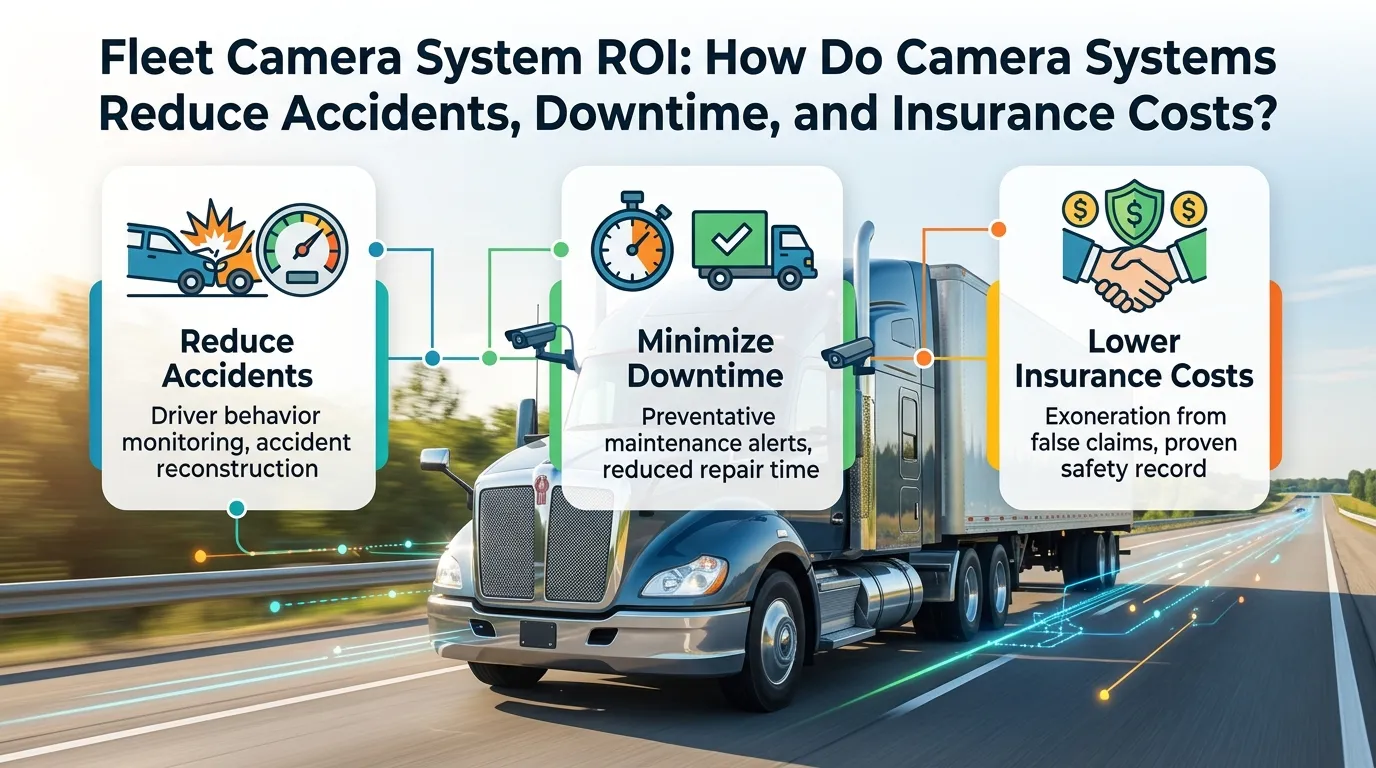
A fleet camera project can look expensive when buyers compare only hardware prices. But accidents, claim disputes, vehicle downtime, and unclear incident records can keep draining money in ways that are harder to track and harder to control.
Fleet camera system ROI comes from more than accident reduction alone. It also comes from lower downtime, faster incident review, better claim handling, reduced operational disruption, and stronger control over avoidable costs across the fleet.
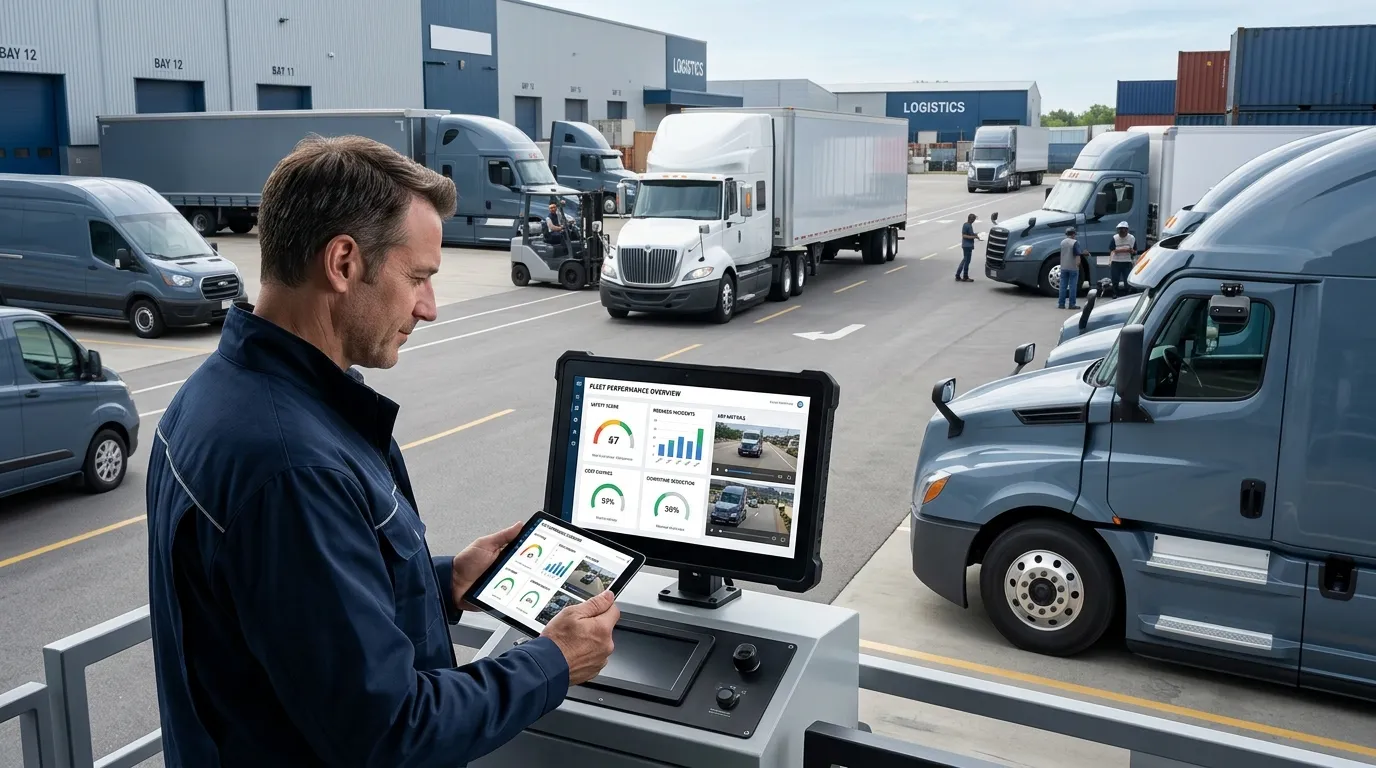
When fleet managers first evaluate a camera system, the discussion often starts with price. That is understandable because hardware cost is visible and installation cost can usually be estimated. But the real financial effect of a fleet camera system usually appears after deployment, not before it. Better visibility during reversing, turning, and daily maneuvering can help prevent incidents. Recorded footage can also help clarify what actually happened after an event. That changes more than safety. It changes cost control. In many fleet operations, the return on investment does not come from one dramatic benefit. It comes from a series of smaller improvements that reduce friction, loss, and uncertainty over time.
Quick Answer: What Drives Fleet Camera System ROI?
Fleet camera system ROI is driven by more than fewer accidents. It is also driven by lower vehicle downtime, faster incident review, clearer claims handling, stronger video evidence, and better control over recurring low-speed damage and operational disruption.
A practical way to think about fleet camera ROI is this:
- better visibility helps reduce avoidable accidents
- recorded video evidence helps improve claim handling
- fewer incidents help reduce downtime and workshop disruption
- faster review and better clarity help reduce management friction
- small repeated savings across the fleet often create the strongest long-term return
Why Is Fleet Camera System ROI Often Misunderstood?
Fleet camera system ROI is often misunderstood because many buyers compare only purchase and installation cost while ignoring the wider financial effect of accidents, downtime, claim disputes, driver coaching, and daily operational disruption. In practice, ROI is created across several cost areas, not just one.
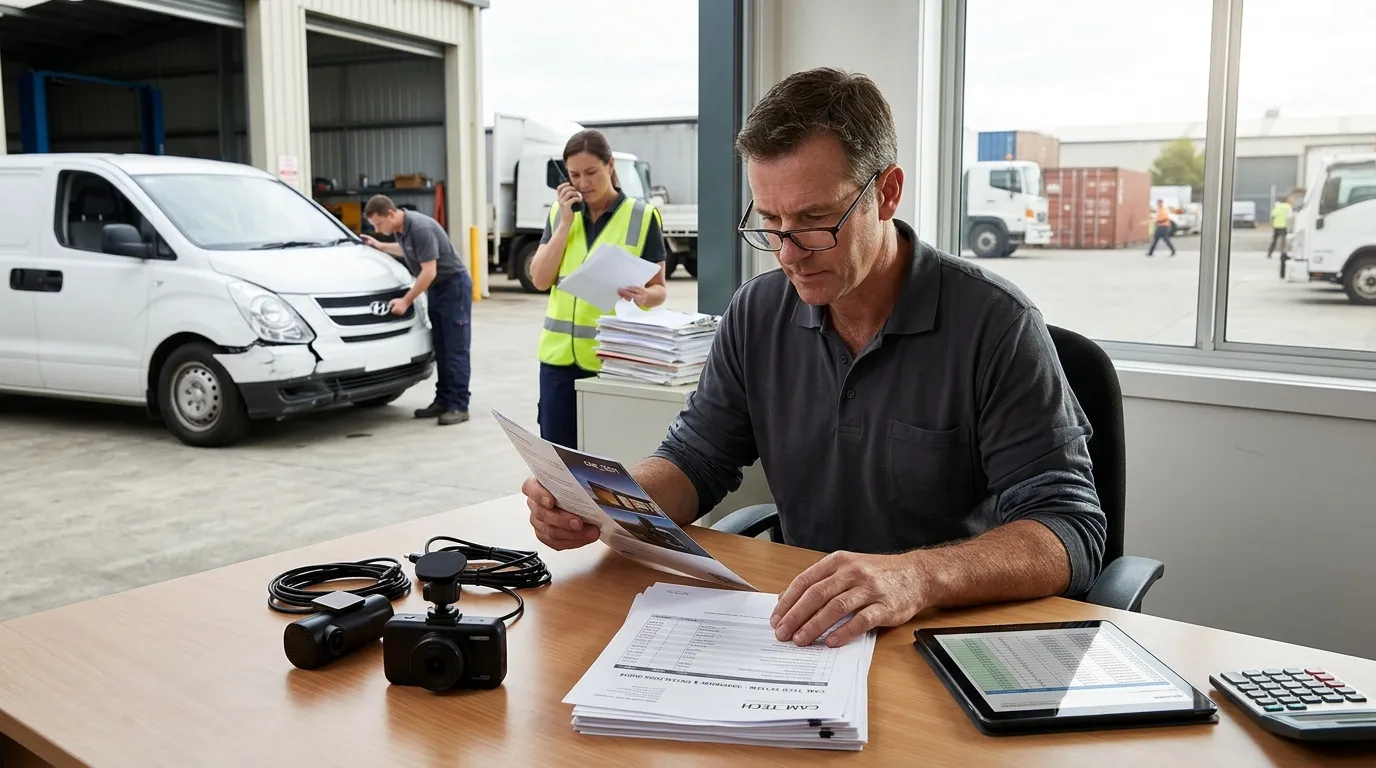
This misunderstanding often happens because direct cost is easier to see than avoided cost. If a fleet buys a camera system, the invoice is immediate. But if the system prevents one reversing accident, shortens one claim dispute, or helps resolve one false accusation, the value may be spread across several teams and several months. That makes it less obvious, even though it is still real.
Another reason ROI gets misunderstood is that some fleets treat camera systems as optional visibility accessories rather than operational tools. Once the system is viewed only as extra equipment, the discussion becomes too narrow and focuses mainly on upfront spend. But when the system is treated as part of risk control, incident evidence, and daily maneuvering support, the ROI discussion becomes much more realistic.
Not all fleets lose money in the same way either. One fleet may be under pressure from reversing damage. Another may be losing time in insurance disputes. Another may feel the cost most clearly through workshop downtime or customer complaints after incidents. That is why the real return depends on what the fleet is trying to improve, not only on the product category.
If the fleet is still deciding what kind of system best fits its operating risk, this discussion also connects closely to a broader fleet camera system selection guide.
| Common ROI mistake | What it misses |
|---|---|
| Looking only at hardware cost | Ignores avoided losses after deployment |
| Focusing only on accident count | Misses downtime and claim-related savings |
| Treating cameras as optional accessories | Underestimates operational value |
| Using one ROI model for every fleet | Ignores different cost pressures by fleet type |
How Do Camera Systems Help Reduce Accident-Related Costs?
Camera systems help reduce accident-related costs by improving visibility in blind spots, supporting safer reversing and turning, and reducing the chance of low-speed collisions, side incidents, and avoidable maneuvering damage. Better visibility can reduce both direct repair costs and the hidden operational cost of routine incidents.
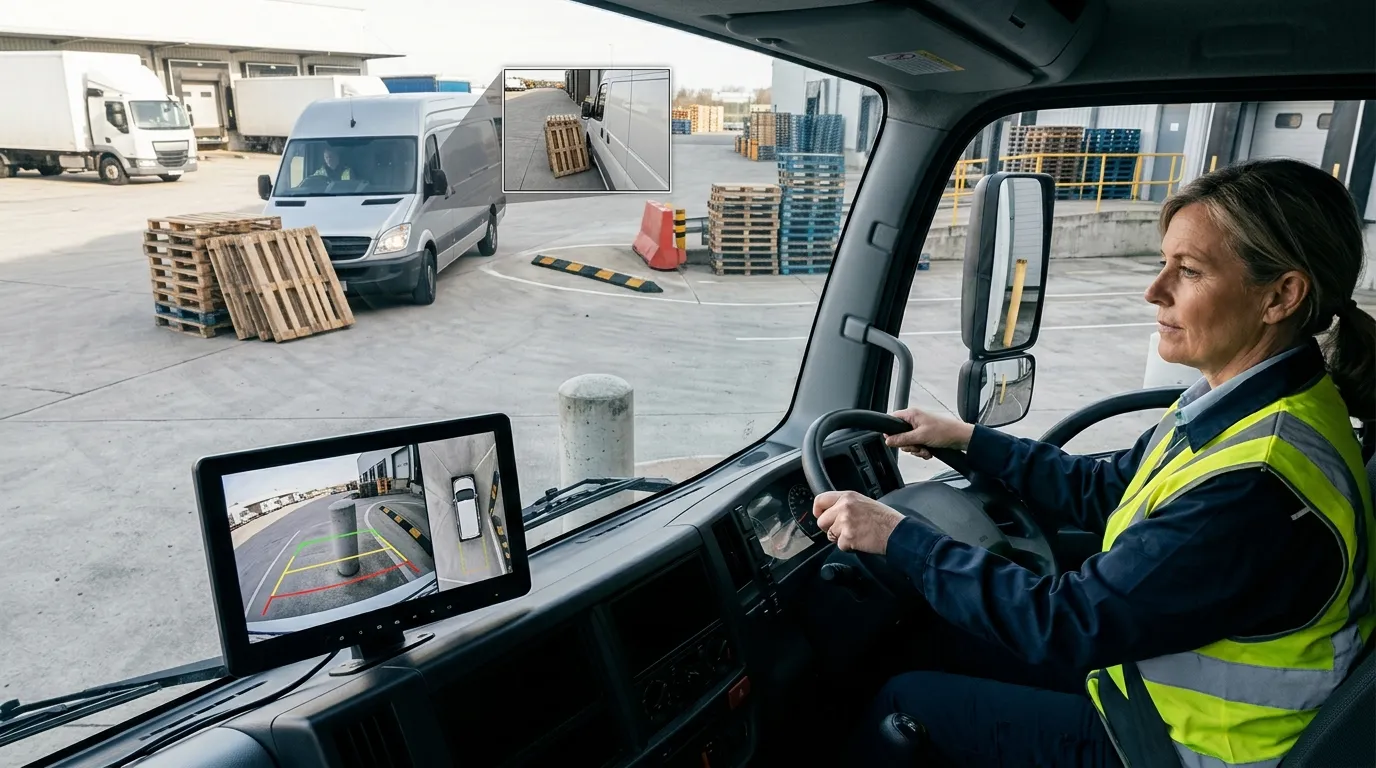
In many commercial fleets, a large share of daily incident cost comes from ordinary events rather than severe crashes. A truck clips a fixed object while reversing. A side area is not fully visible during a turn. A vehicle makes contact in a depot or loading zone. These are not always dramatic accidents, but they are expensive because they happen repeatedly and create real operational disruption.
This is where camera systems often deliver their most practical value. They help the driver see the risk area earlier and more clearly. A well-placed rear camera can improve reversing judgment. A side camera can support awareness during turning or close-passing situations. A front camera can help reveal near-front blind zones that are harder to assess from the cab. Each of these improvements can reduce the chance of avoidable contact. If camera positions are still being defined, fleets should also review a dedicated truck camera placement guide so the visibility gain matches the real risk zone.
The value is not only in preventing major incidents. It is also in reducing the steady stream of smaller losses that slowly consume maintenance budget, workshop time, and scheduling flexibility. In many fleets, those repeated low-speed incidents are where the financial pressure is felt most often.
| Accident-related cost area | How camera systems help |
|---|---|
| Vehicle repair | Reduce avoidable contact damage |
| Third-party property damage | Improve maneuvering awareness |
| Depot or yard incidents | Support safer low-speed movement |
| Driver stress after incidents | Increase confidence in difficult maneuvers |
| Unplanned service interruption | Keep vehicles in operation longer |
How Does Video Evidence Improve Claims and Insurance Outcomes?
Video evidence improves claims and insurance outcomes by helping fleets review incidents faster, establish what happened more clearly, and reduce uncertainty in fault discussion. Better footage can support internal review, customer communication, insurer discussion, and protection against false or unclear claims.
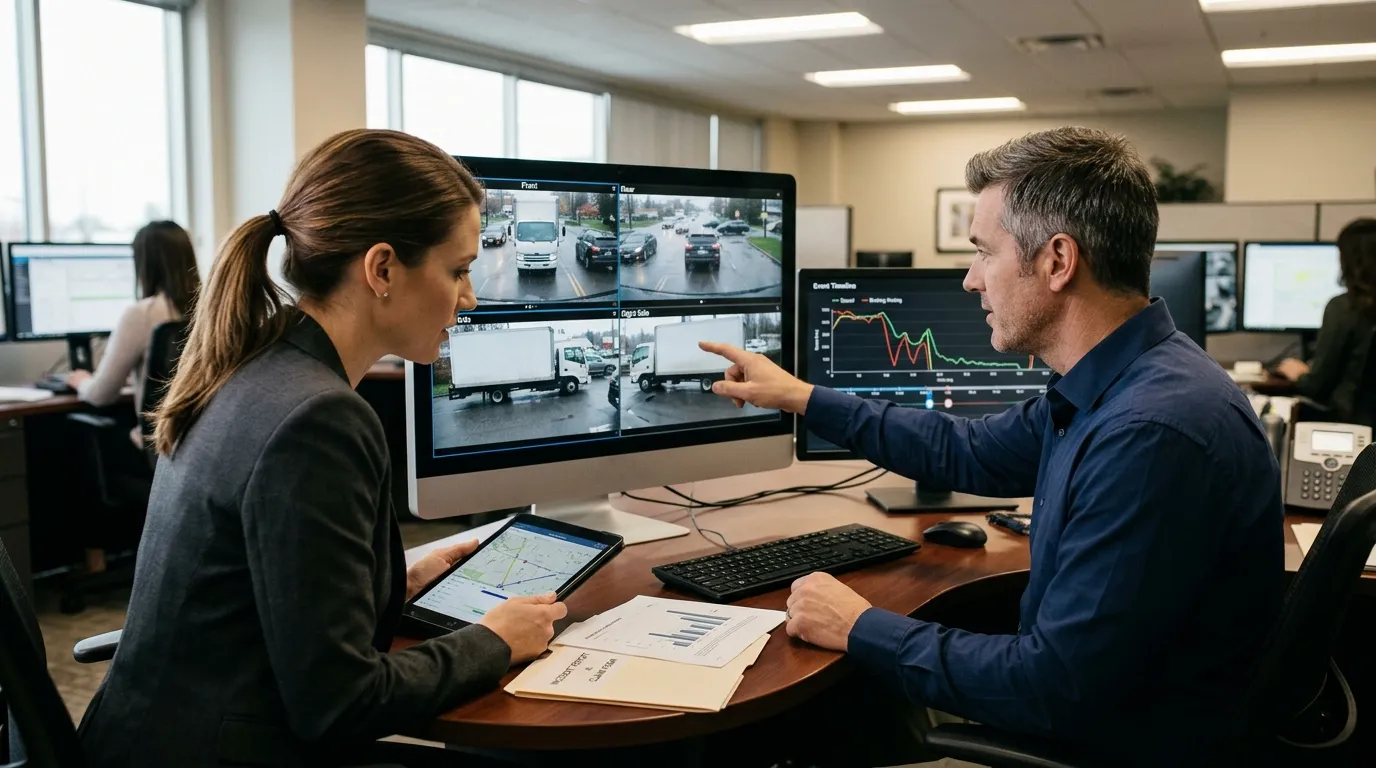
An incident becomes more expensive when the fleet cannot explain it clearly. Without reliable footage, even a manageable event can turn into a slow and frustrating dispute. The cost is not only in the payout. It is also in the time managers spend collecting statements, reviewing damage, talking with customers, and coordinating with insurers.
A camera system with reliable recording can shorten that process. When footage is available and easy to review, the fleet can often move from uncertainty to a more concrete understanding much faster. That does not mean cameras solve every dispute automatically. But they can reduce guesswork, conflicting accounts, and preventable confusion.
Video also becomes more valuable as fleet scale grows. A small operator may review incidents informally. A larger fleet usually needs a more structured process. Once multiple vehicles, drivers, sites, and third parties are involved, evidence quality matters much more. In those conditions, video is not only a record. It becomes part of operational control.
That is also why system choice matters. A camera that shows the view is useful. A system that records, stores, and retrieves that view properly often has much stronger ROI in real fleet management. If recording architecture is still under review, fleets should compare options through a 4CH vs 8CH vs MDVR fleet camera system guide before finalizing the platform.
| Claims-related issue | How video footage helps |
|---|---|
| Unclear incident sequence | Gives a clearer factual timeline |
| Fault disputes | Reduces uncertainty in review |
| Slow internal investigation | Speeds incident assessment |
| Customer complaints | Supports a more confident response |
| Insurance communication | Provides a stronger evidence base |
Why Does Downtime Reduction Matter So Much in ROI?
Downtime reduction matters in fleet camera ROI because avoiding incidents helps keep vehicles available, reduces workshop disruption, lowers scheduling pressure, and prevents loss of productive operating time. Even modest reductions in downtime can create meaningful value across a working fleet.
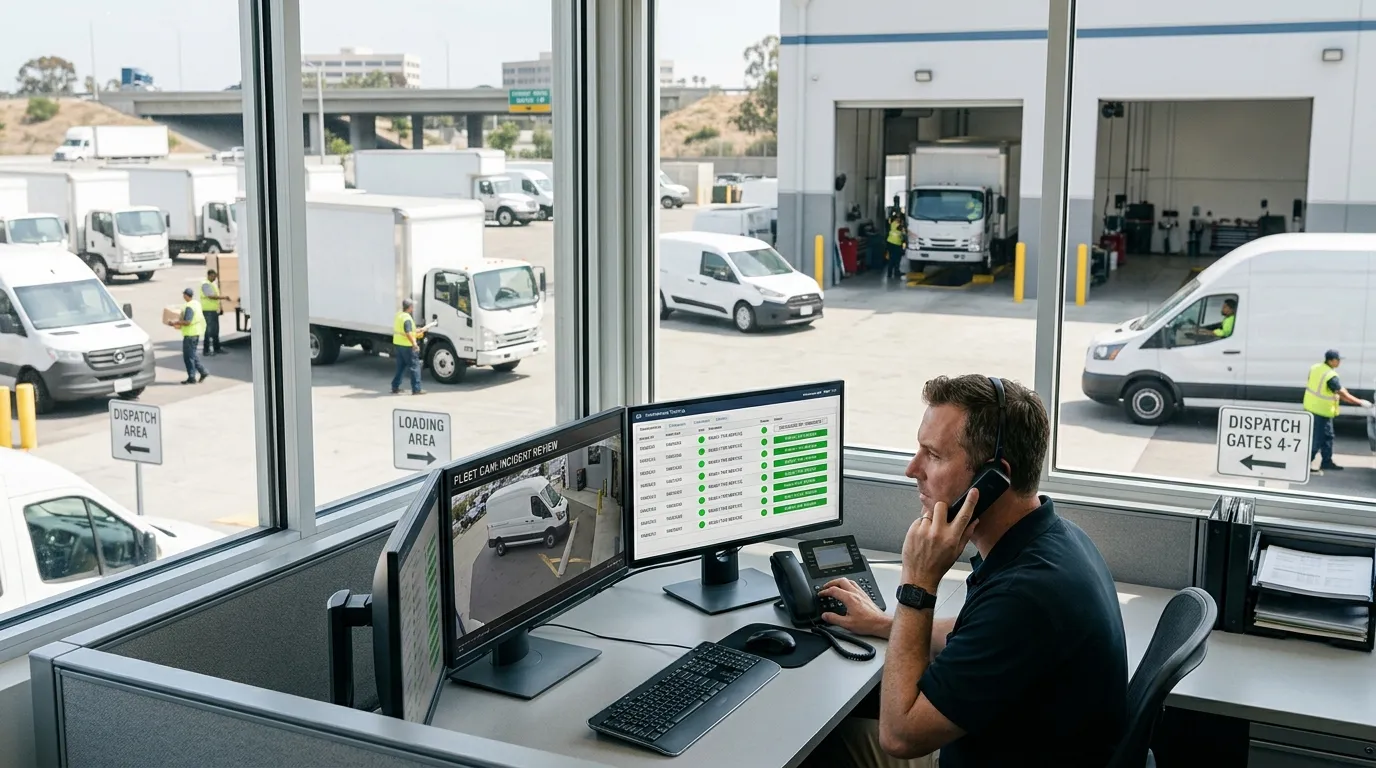
A repairable incident is still expensive when the vehicle misses work, falls out of rotation, or requires extra workshop handling. In many fleets, downtime creates cost faster than people expect. That is especially true in logistics operations, service fleets, municipal fleets, and other environments where route continuity matters.
A camera system supports downtime reduction in two ways. First, it can help prevent incidents that would otherwise take the vehicle out of service. Second, when an event does happen, recorded footage can help the fleet review and respond more quickly. That can shorten the time between incident, decision, and return to operation.
Downtime also exposes hidden inefficiency. One vehicle delay can push pressure onto other vehicles and drivers, and the financial effect spreads beyond the first unit involved. This is why ROI should not only count visible savings. It should also consider how better visibility and better evidence help stabilize daily operations. If installation disruption is also part of the cost discussion, this topic links naturally with a broader fleet camera installation downtime guide.
In many fleets, this part of the ROI becomes much easier to explain once managers compare incident handling before and after deployment over several months.
| Downtime source | Camera system ROI impact |
|---|---|
| Repair-related vehicle unavailability | Fewer avoidable incidents |
| Workshop scheduling pressure | Less disruption from minor damage |
| Route or service interruption | Better fleet continuity |
| Slow event review | Faster return-to-action decisions |
| Replacement vehicle pressure | Reduced strain on backup assets |
How Should Fleets Evaluate ROI Before Buying a Camera System?
Fleets should evaluate camera system ROI by looking at current incident patterns, vehicle downtime, claim frequency, maneuvering risks, and the operational value of better evidence and visibility. The best ROI model starts with real fleet pain points, not product features alone.
A practical ROI evaluation starts with a simple question: where is the fleet already losing money? If the main issue is reversing damage, the camera layout should focus there. If claim disputes are a recurring problem, recording quality and footage access become more important. If driver confidence in large vehicles is low, the value of better side and front visibility may be higher than expected.
This is why generic ROI promises are rarely useful. A better approach is to look at the fleet’s own operating pattern. What types of incidents happen most often? Which vehicles are involved? How many workshop hours follow a typical low-speed impact? How long does a disputed claim take to review? Once those questions are answered, the ROI discussion becomes much more concrete.
Pilot deployment can also help here. A small group of trial vehicles can reveal whether the system improves maneuvering behavior, supports incident review, and fits daily operation. That gives managers a stronger base for a wider rollout.
The goal is not to force a perfect financial formula. The goal is to make a grounded decision that reflects real fleet costs, real vehicle risk, and real operational pressure.
| ROI evaluation step | What it helps determine |
|---|---|
| Review current incident types | Where visibility gaps cost the fleet most |
| Check downtime patterns | Operational value of incident prevention |
| Examine claim handling difficulty | Need for stronger recording evidence |
| Match system to vehicle risk | Best fit for channel count and camera layout |
| Pilot on selected vehicles | Real-world proof before scaling |
Common Mistakes Fleets Make When Calculating Camera System ROI
The most common mistake is trying to evaluate ROI using only upfront hardware cost. That usually leads to an incomplete and misleading decision.
Other common mistakes include:
- ignoring low-speed maneuvering incidents because each one seems small
- separating accident cost from downtime cost even when they affect the same event
- underestimating the value of faster incident review and clearer evidence
- buying a system with weak recording capability for a fleet that relies on claims handling
- using a generic ROI model without checking the fleet’s own loss pattern
In practice, ROI is strongest when the fleet measures the repeated operational losses that the camera system is meant to reduce.
Conclusie
Fleet camera system ROI should not be judged by hardware price alone. The stronger financial return usually comes from accident reduction, downtime control, claim clarity, and the wider operational value of better visibility and better evidence.
In many commercial fleets, ROI is created by reducing everyday losses that repeat across vehicles and over time—not just by preventing one major event. When fleets evaluate camera systems against their real incident patterns and operational pressure, the business case becomes much clearer.
FAQ
How do fleet camera systems improve ROI?
Fleet camera systems improve ROI by helping reduce avoidable accidents, shortening incident review, improving claims handling, lowering downtime, and reducing repeated low-speed damage across the fleet.
Do camera systems only create ROI by reducing accidents?
No. Accident reduction is only one part of the return. ROI can also come from lower downtime, stronger evidence, faster claim handling, and smoother daily fleet operations.
Why does video evidence matter in fleet camera ROI?
Video evidence matters because it helps fleets explain incidents more clearly, reduce uncertainty in fault disputes, speed internal review, and improve communication with customers and insurers.
How should a fleet evaluate camera system ROI before buying?
A fleet should evaluate ROI by reviewing its own incident types, downtime patterns, claim difficulty, maneuvering risks, and the expected value of better visibility and recording.
What is the biggest mistake when calculating fleet camera ROI?
One of the biggest mistakes is focusing only on upfront hardware cost while ignoring recurring losses from accidents, downtime, disputes, and poor incident visibility.

 Dutch
Dutch  English
  Spanish
  Japanese
  German
  Arabic