
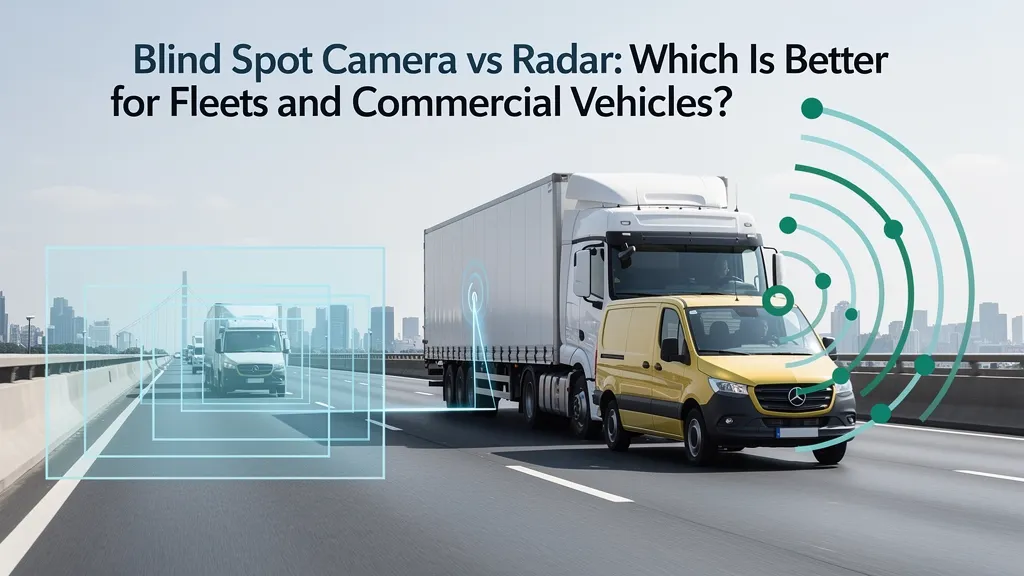
Choosing between a blind spot camera and a radar blind spot detection (BSD) system is not just a technical decision. It changes driver trust, incident rates, and how reliably hazards are confirmed during real operations like lane changes, turning, reversing, and yard maneuvering.
In fleet projects, I rarely see failures caused by “bad technology.” I see failures caused by poor placement, weak workflow rules, and alerts drivers do not trust. This guide compares camera vs radar in practical fleet terms: what each does best, where each fails, and when combining both makes the most sense.
Quick Answer: Camera vs Radar, Which Is Better for Fleets?
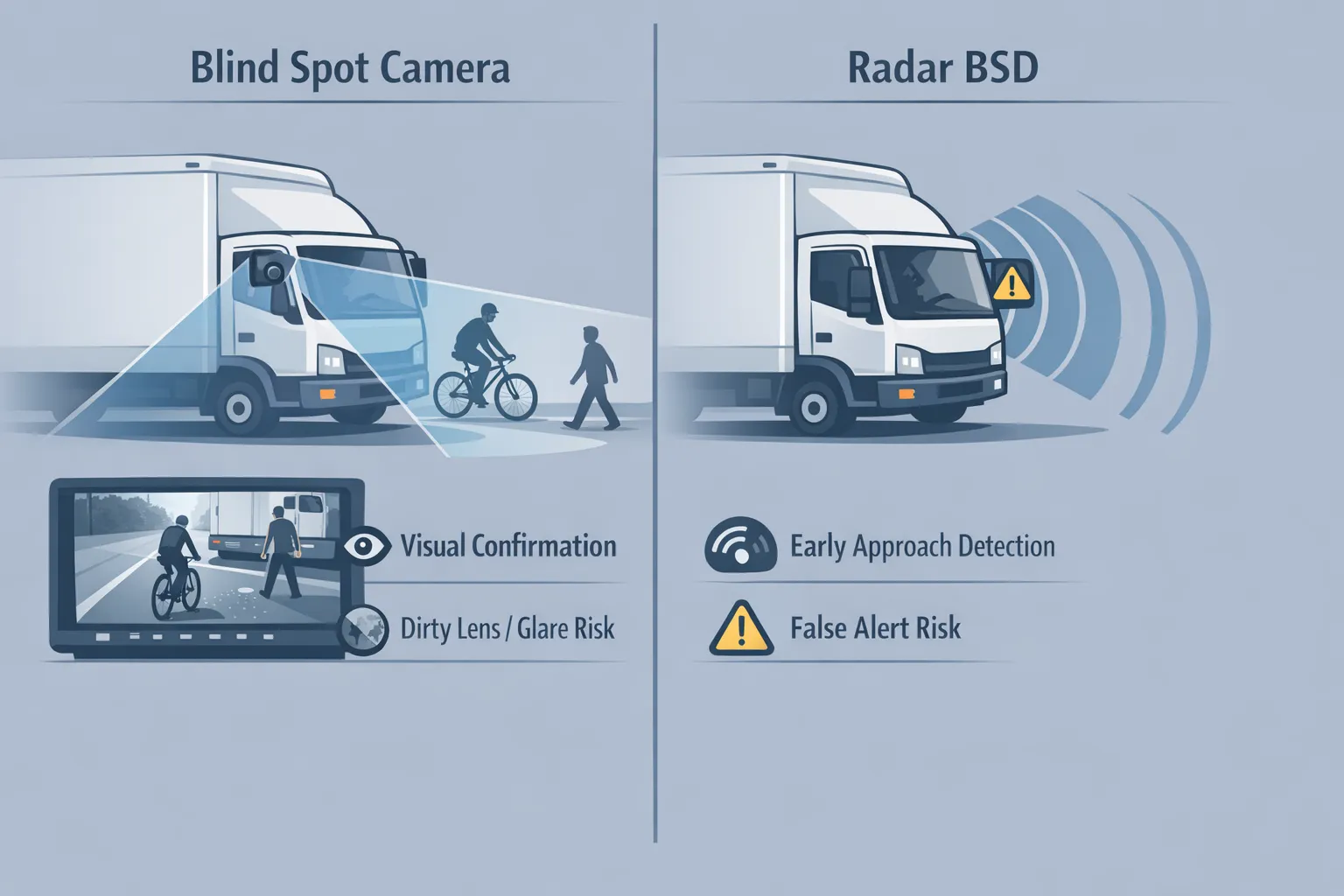
Radar is usually better for lane-change warnings at speed because it detects approaching vehicles early. Cameras are usually better for turning, reversing, and pedestrian-heavy environments because drivers can see exactly what is beside or behind them. Many fleets get the best results with a hybrid setup: radar for early warning plus cameras for confirmation, supported by consistent installation standards and a simple driver workflow.
If you want the full blind spot overview across vehicle types, start with my guide to vehicle blind spots and detection systems.
How Radar Blind Spot Detection Works
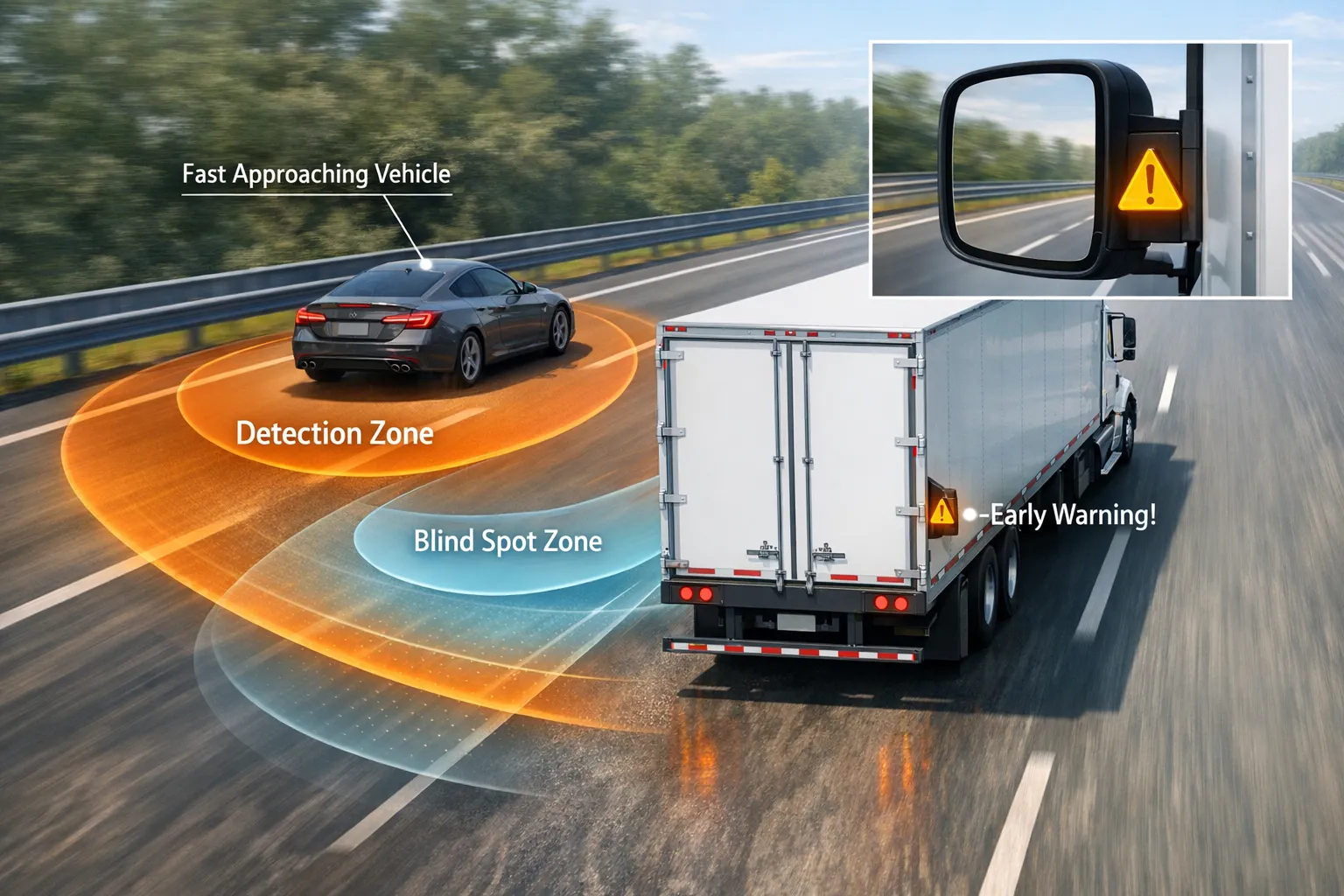
Radar-based BSD uses radio waves to detect objects in defined side zones, and sometimes rear zones, then triggers a warning when something enters the detection area.
Radar BSD is typically best at:
- Detecting moving vehicles approaching from behind
- Supporting lane-change warnings at highway speed
- Operating in many weather conditions
Radar BSD can struggle with:
- Identifying what the object is (no image)
- Close-range maneuvering with complex obstacles
- Situations where drivers need precise position context
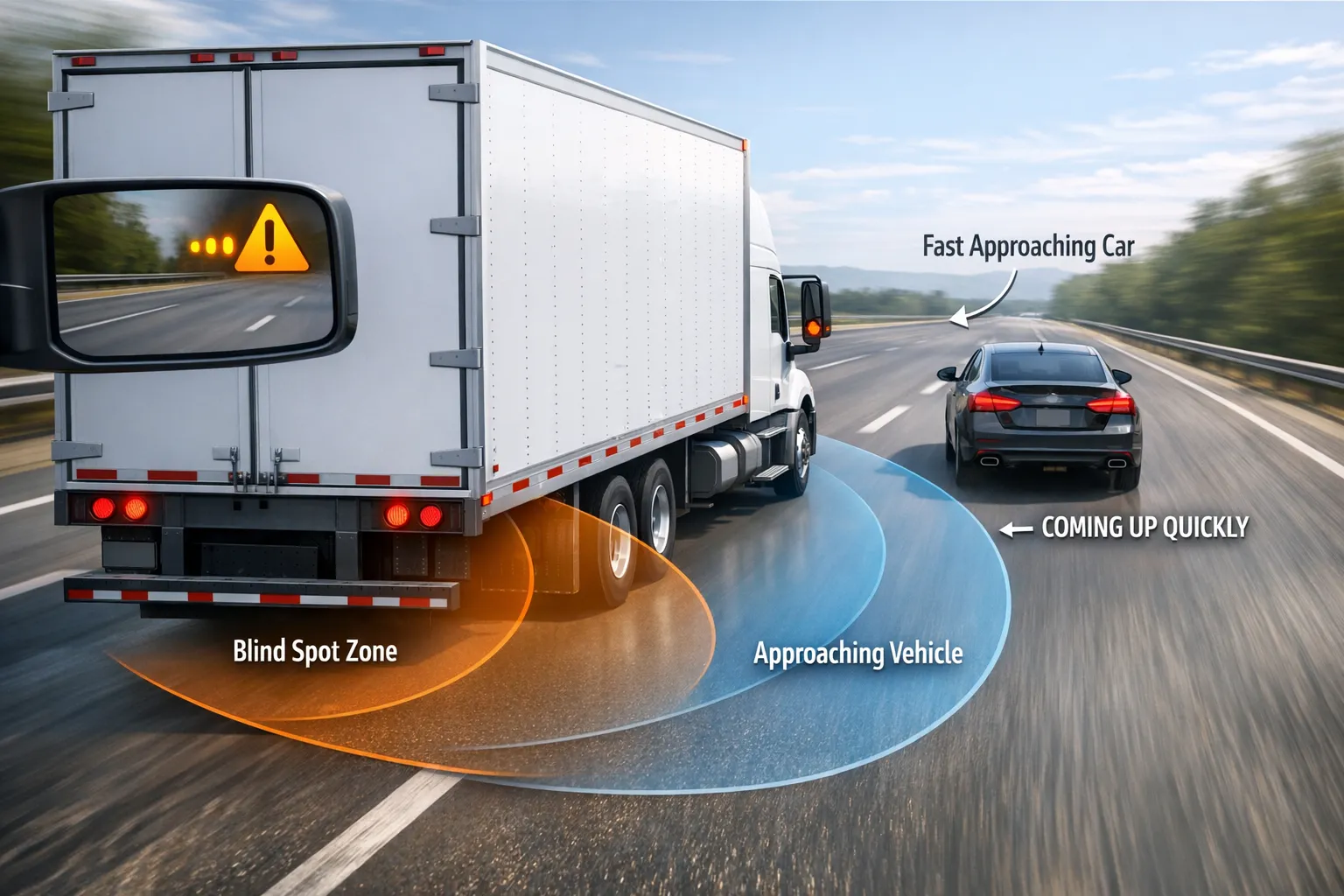
Key takeaway: Radar helps drivers decide “do not move yet,” but it often does not help them understand “what is there and exactly where.”
How Camera-Based Blind Spot Systems Work
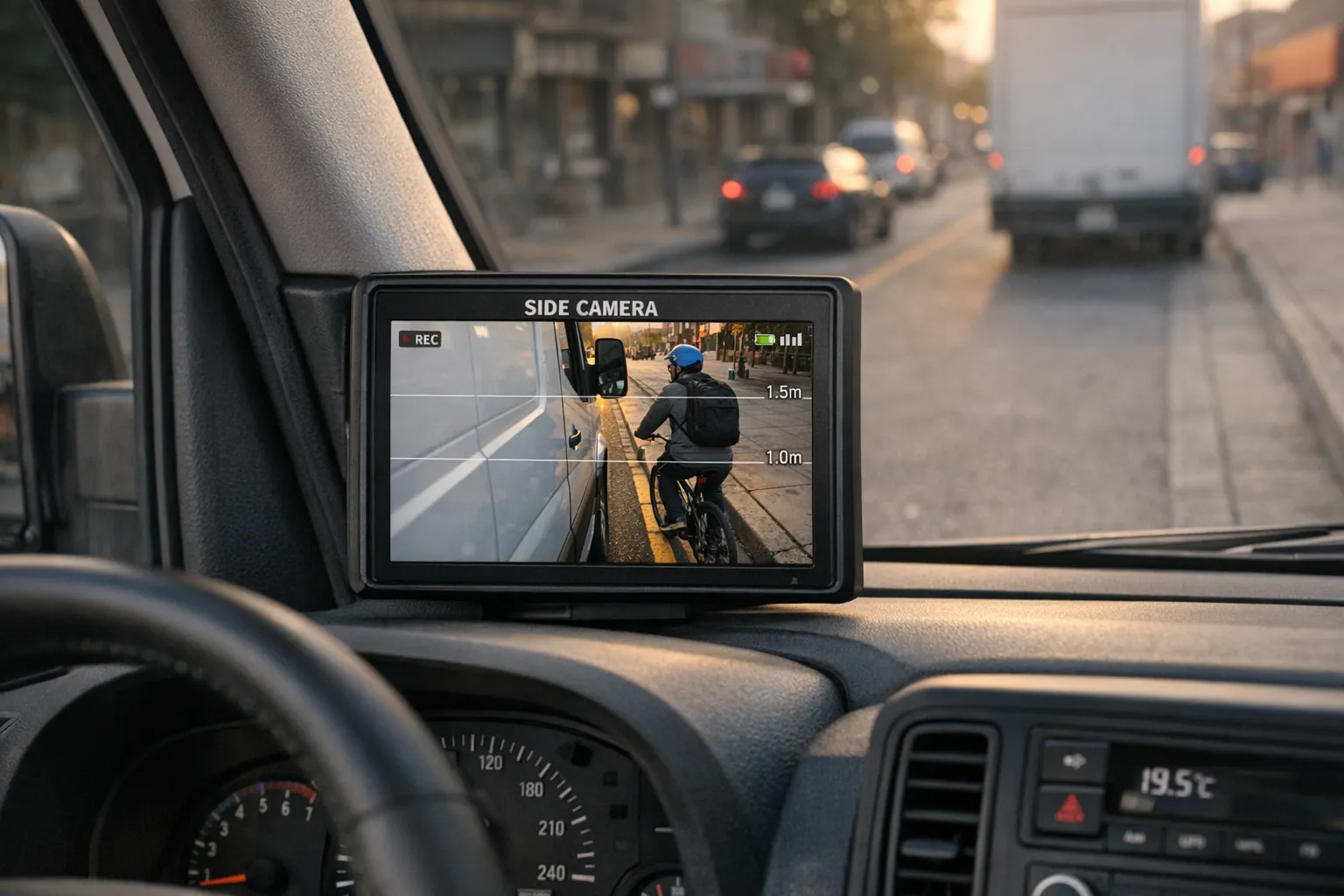
Camera-based systems use wide-angle cameras to show real-time video of side or rear blind zones. The driver confirms the hazard visually on a monitor or integrated display.
Camera systems are typically best at:
- Providing visual confirmation (what and where)
- Maneuvering, reversing, docking, and tight turns
- Mixed pedestrian environments such as warehouses, yards, and urban delivery
Camera systems can struggle with:
- Poor installation angles that create coverage gaps
- Dirty lenses, glare, or low-light if not designed and maintained correctly
- Driver workflow issues if displays are poorly placed
Key takeaway: Cameras reduce uncertainty, but only when the view matches the real blind zone and the driver can glance naturally.
Camera vs Radar: Practical Fleet Comparison
| Factor | Radar BSD | Camera-Based Systems | What I Watch in Fleet Deployments |
|---|---|---|---|
| Primary value | Warning-based detection | Visual confirmation | Does the driver trust it during routine moves? |
| Best use cases | Highway lane changes, fast merges | Reversing, turning, maneuvering, pedestrian zones | Match the tool to the maneuver that causes your incidents |
| What the driver gets | Alert or indicator | Real-time image | Alerts without context get ignored over time |
| Weather performance | Often strong | Depends on lens protection and low-light handling | Weather is not the main issue, trust is |
| Typical fleet failure | False alerts and unclear context | Coverage gaps from poor angle, dirty lens | Placement and workflow break systems faster than hardware |
| Installation dependency | Moderate | High | Camera projects need stronger install standards |
| Driver trust pattern | Drops if alerts feel random | Higher if the view matches reality | Trust is your leading indicator for ROI |
| Best ROI scenario | High-speed merge exposure | Dock, yard, urban delivery, pedestrian risk | Pick the scenario that produces your highest incident cost |
Key takeaway: Radar is strongest when the hazard is approaching fast from behind. Cameras are strongest when hazards are close and the driver needs certainty.
False Alerts vs Missed Hazards: What Really Happens in the Field
Most fleets do not abandon systems because they “do not work.” They abandon systems because drivers stop trusting them.
Radar: False Alerts and Unclear Context
Radar false alerts often come from:
- Sensitivity that is too high for the route environment
- Adjacent lane traffic triggering repeated alerts in dense flow
- Roadside objects and reflective surfaces creating noise
Driver reaction becomes predictable: drivers start ignoring alerts, especially if the alert triggers during normal merges.
How fleets reduce this:
- Tune detection zones for the route mix instead of using default settings
- Pilot on a representative route first, then scale
- Train drivers on what the alert means and when it matters
Cameras: Missed Hazards from Poor Coverage
Camera “misses” often come from:
- Wrong camera aim that does not cover the true blind zone
- Lens contamination in spray-heavy mounting locations
- Monitor placement that does not match natural glance behavior
Driver reaction becomes predictable: drivers stop checking the display because it does not feel reliable.
How fleets reduce this:
- Standardize camera angles by vehicle type, then verify coverage during install
- Assign a cleaning and inspection routine to protect the view
- Place displays where drivers can confirm without head movement
Key takeaway: Radar fails when it creates noise. Cameras fail when they create uncertainty. The fix is standards plus workflow, not more devices.
Which Is Better for Trucks?
Trucks have multi-region blind zones and turning geometry changes the risk during maneuvers. In practice:
- Radar helps with lane-change warnings at speed
- Cameras help with side confirmation, turn squeeze risk, and reversing or dock risk
If you want to map truck blind zones first, I break them down in my guide to truck blind spot zones with fleet layouts
Recommendation I use most often:
If your incident cost is driven by side-swipes and reversing impacts, I start with far-side camera plus rear camera, then add radar for highway exposure.
Which Is Better for Vans and Urban Delivery Fleets?
Urban fleets face frequent stops, pedestrians and cyclists, tight turns, and low-speed reversing. In these conditions, visual confirmation often matters more than warning signals.
Recommendation I use most often:
Start with camera coverage for side and rear zones, then add radar only if lane-change incidents at speed are a proven issue in your routes.
Which Is Better for Buses and Passenger Transport?
Buses often need consistent side-zone visibility near stops and curbside areas, plus reliable confirmation near doors.
Recommendation I use most often:
Prioritize camera coverage near curbside and door zones first, then add radar for lane-change warnings depending on route design.
Which Is Better for Industrial Vehicles and Work Sites?
In warehouses, yards, and construction sites, hazards are close-range, pedestrians appear suddenly, and reversing and turning are frequent.
Recommendation I use most often:
Cameras usually provide the most direct safety value because the driver must see the hazard and its exact position.
If you operate in warehouses, you may also like my guide on how forklift camera systems reduce pedestrian collision risk in warehouses.
The Best Answer for Many Fleets: Hybrid (Radar + Camera)
A hybrid approach is common when fleets need both early warnings and clear confirmation.
Common Hybrid Layout
- Radar BSD for highway lane-change warnings
- Far-side camera for confirmation in the critical side region
- Rear camera for reversing and docks
- Driver workflow: alert, check display, confirm, then maneuver
Minimum viable pilot note:
If I need the fastest pilot ROI, I start with far-side camera plus rear camera. If driver trust is high and incidents justify it, I add radar next.
Fleet Selection Checklist: How to Decide
Choose Radar BSD first if:
- Your main incidents are highway lane changes and fast merges
- You want warning indicators without a screen-first workflow
- Vehicle configurations are consistent across the fleet
Choose Camera coverage first if:
- Most incidents happen during turning, reversing, or maneuvering
- You operate in pedestrian-heavy environments
- Drivers must identify the hazard, not just be warned
Choose Hybrid if:
- You operate both highway and yard or urban conditions
- You need early warnings plus clear confirmation
- You want higher driver trust and fewer ignored alerts
If your fleet is doing a retrofit, I use this checklist approach to avoid common rollout mistakes in my aftermarket blind spot retrofit guide.
Want a Recommendation Based on Your Fleet Scenarios?
The right choice depends on vehicle types, route environment, and how drivers actually work during lane changes, turns, and reversing.
I can help your team:
- Decide where warnings are enough and where confirmation is required
- Recommend camera angles and mounting locations by vehicle type
- Suggest radar sensitivity and practical zone settings that reduce false alerts
- Estimate installation scope and rollout standards
To get a practical recommendation, share:
- Vehicle types and body styles
- Your route mix (highway, urban, yard, worksite)
- Your top incident scenario (side-swipe, turning, reversing)
- Downtime constraints for installation
👉 Share your vehicle list and scenarios to get a recommended solution
Klik hier
FAQ
Is radar or camera better for blind spot detection?
Radar is usually better for lane-change warnings at speed because it detects approaching vehicles early. Cameras are usually better for turning, reversing, and pedestrian-heavy environments because drivers can see what is present and where it sits in the zone. Many fleets get the best results with a hybrid approach.
Do blind spot cameras work at night?
Yes, but night performance depends on low-light design, glare handling, and lens cleanliness. In fleet deployments, mounting position, protection from spray, and a basic cleaning routine often matter as much as the camera specification.
Why do radar systems sometimes give false alerts?
False alerts often happen when detection zones are too sensitive for dense traffic, when adjacent lane flow triggers repeated warnings, or when roadside objects create noise. Correct mounting and tuning based on route conditions reduce alert fatigue.
What’s the best setup for trucks?
Many fleets use radar for lane-change warnings and cameras for far-side confirmation and reversing visibility. Trucks have multi-region blind zones that change during turns, so combining warning and visibility often improves both safety outcomes and driver trust.

 Dutch
Dutch  English
  Spanish
  Japanese
  German
  Arabic