
Choosing a diagnostic scanner for fleet vehicles is no longer a minor technical choice. For fleet managers, procurement teams, and safety decision-makers, it directly affects uptime, compliance, and long-term operating costs. I have seen fleets struggle not because they lacked vehicles, but because they lacked clear diagnostic insight.
This guide explains how to choose the right diagnostic scanner for fleet vehicles. I focus on decision logic, real-world use cases, and industry-backed data. There is no product promotion here. The goal is to help you evaluate options with confidence.
Why Diagnostic Scanners Matter in Fleet Operations
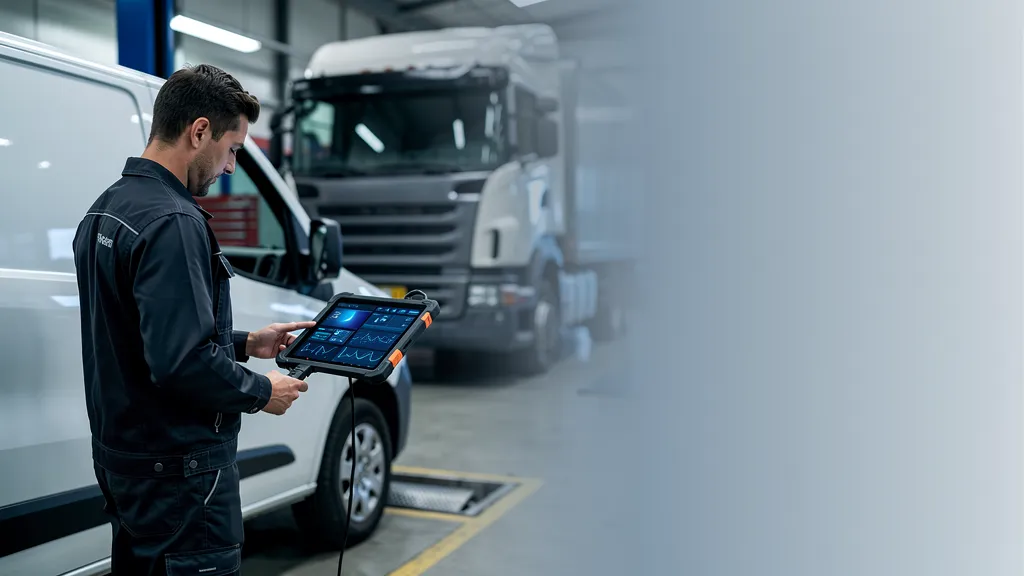
Fleet vehicles operate under constant pressure. They run longer hours, cover more distance, and face stricter safety and emissions checks than personal vehicles. Studies referenced by SAE and major fleet telematics providers show that preventive diagnostics can reduce unplanned breakdowns by over 30 percent across mixed fleets.
A diagnostic scanner provides visibility into vehicle health. It allows teams to read fault codes, analyze live data, and confirm emissions readiness. For fleets, this visibility connects directly to reduced downtime, safer vehicles, and better maintenance planning.
For individual drivers or small operators, the value is simpler. A scanner reduces uncertainty. It helps confirm issues early and avoids unnecessary repair visits.
Core Benefits of Using a Fleet Diagnostic Scanner
Reduced Downtime and Higher Vehicle Availability
Unplanned downtime is one of the most expensive challenges in fleet management. Maintenance benchmarks from fleet industry reports indicate that vehicles supported by preventive diagnostics experience up to 40 percent fewer roadside failures. Diagnostic scanners enable this by identifying warning signs before a fault escalates.
Better Safety and Compliance Control
Many fleets must meet OBD II, EOBD, or heavy-duty emissions standards. Diagnostic scanners generate records that support compliance audits and inspections. This reduces risk during regulatory reviews and improves internal accountability.
Smarter Maintenance Spending
Without diagnostic data, maintenance decisions rely heavily on experience and guesswork. Diagnostic scanners reduce trial-and-error repairs. Fleets can schedule targeted maintenance, reduce unnecessary part replacements, and better forecast costs over time.
Key Features to Evaluate in a Fleet Diagnostic Scanner
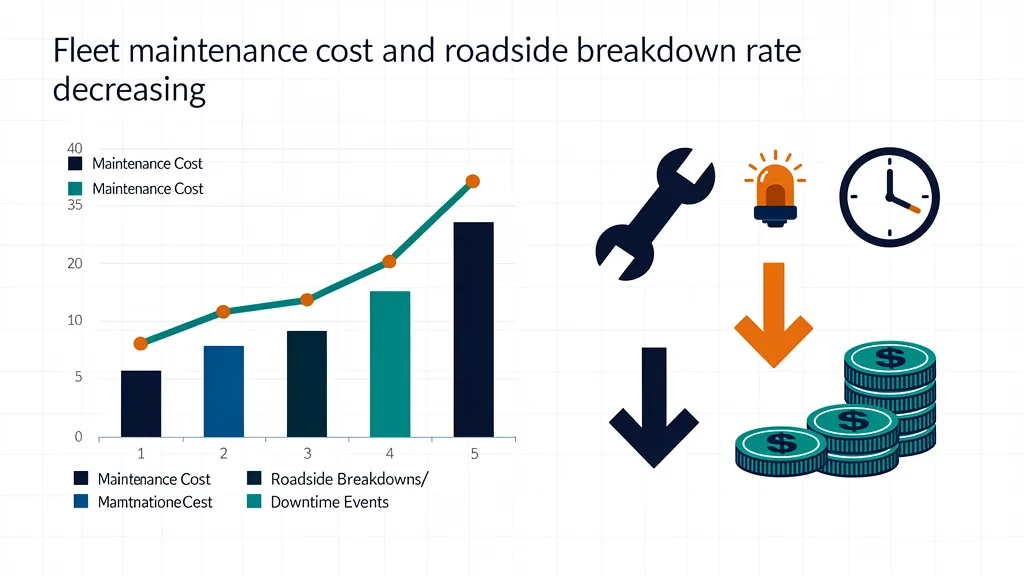
Selecting a scanner based only on price often leads to short-term savings and long-term problems. I recommend evaluating scanners across these core areas.
Vehicle Coverage and Supported Protocols
Most fleets operate a mix of vehicle types and model years. A suitable diagnostic scanner should support:
- OBD II and EOBD for light-duty vehicles
- CAN and J1939 for heavy-duty trucks
- Manufacturer-specific protocols when deeper access is required
Before evaluating tools, I always list all fleet vehicles by year, engine type, and duty cycle. This step alone prevents coverage gaps later.
Diagnostic Depth and Functional Capability
Basic code readers only display fault codes1. Fleet-grade diagnostic scanners provide deeper insight, including:
- Live sensor data
- Freeze frame analysis
- Access to multiple systems such as ABS and transmission
- Exportable diagnostic reports
This depth improves repair accuracy and reduces diagnosis time.
Connectivity and Data Integration
Modern fleet operations depend on connected data. Many diagnostic scanners now integrate with maintenance systems, telematics platforms, or cloud dashboards. Industry surveys from consulting firms show that more than 60 percent of fleet managers prioritize tools that support data integration2.
Integrated diagnostics allow fleets to analyze trends, track recurring faults, and improve preventive maintenance strategies.
Ease of Use and Training Requirements
Even advanced scanners should remain easy to use. Clear interfaces, guided workflows, and consistent menus reduce training time. This matters when multiple technicians or drivers interact with the same tool.
Software Updates and Long-Term Support
Vehicle technology evolves quickly. A scanner without frequent software updates3 becomes obsolete. I recommend checking update frequency, coverage expansion, and technical support terms before making a decision.
Diagnostic Scanner Comparison for Fleet Vehicles
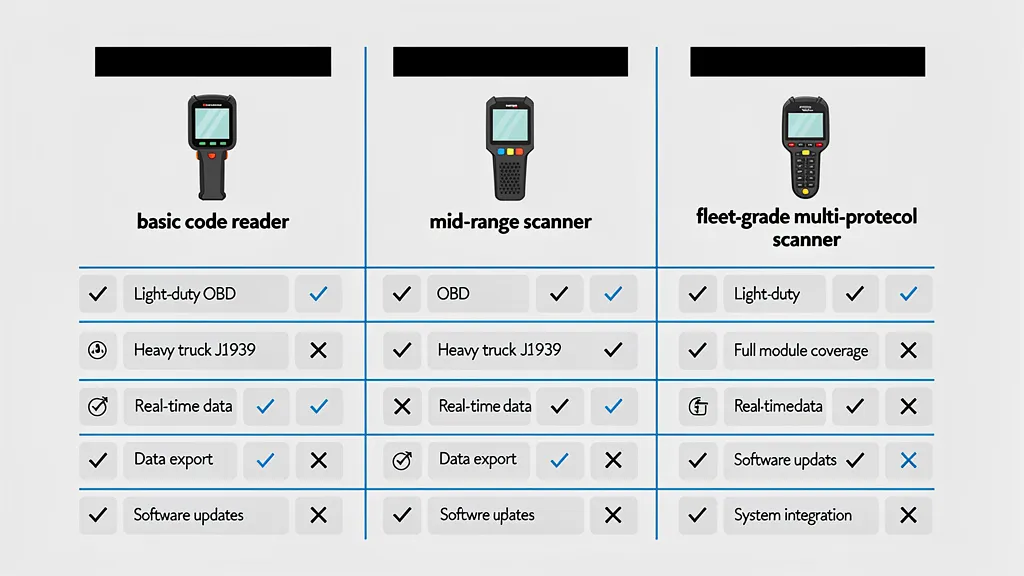
| Feature | Basic Code Reader | Mid-Range Scanner | Fleet-Grade Multi-Protocol Scanner |
|---|---|---|---|
| Light Vehicle OBD II | Yes | Yes | Yes |
| Heavy-Duty Support | Geen | Geen | Yes |
| Live Data | Geen | Yes | Yes |
| Full Module Access | Geen | Partial | Yes |
| Data Export | Geen | CSV / Cloud | |
| Software Updates | Limited | Annual | Frequent |
| System Integration | Geen | Limited | Yes |
This comparison explains why many fleets outgrow entry-level tools quickly as their operations scale.
A Step-by-Step Strategy to Choose a Diagnostic Scanner for Fleets
Step 1: Map Your Fleet Profile
I start by mapping the entire fleet. This includes vehicle types, model years, usage patterns, and compliance requirements. Without this overview, feature selection becomes guesswork.
Step 2: Define Diagnostic Use Cases
Some fleets prioritize emissions compliance4. Others focus on reducing breakdowns or supporting in-house technicians. Clear use cases prevent overbuying or under-specifying tools.
Step 3: Review Data Flow and Reporting Needs
Diagnostic data delivers the most value when it feeds into maintenance planning or compliance reporting systems. This step often determines whether integration features are essential.
Step 4: Calculate Total Cost of Ownership
The purchase price is only one part of the cost. I recommend reviewing:
- Software update subscriptions
- Training time
- Expected device lifespan
- Compatibility with future vehicles
Many fleets find that higher-end scanners deliver better value over a three- to five-year period.
Industry Trends in Fleet Diagnostics
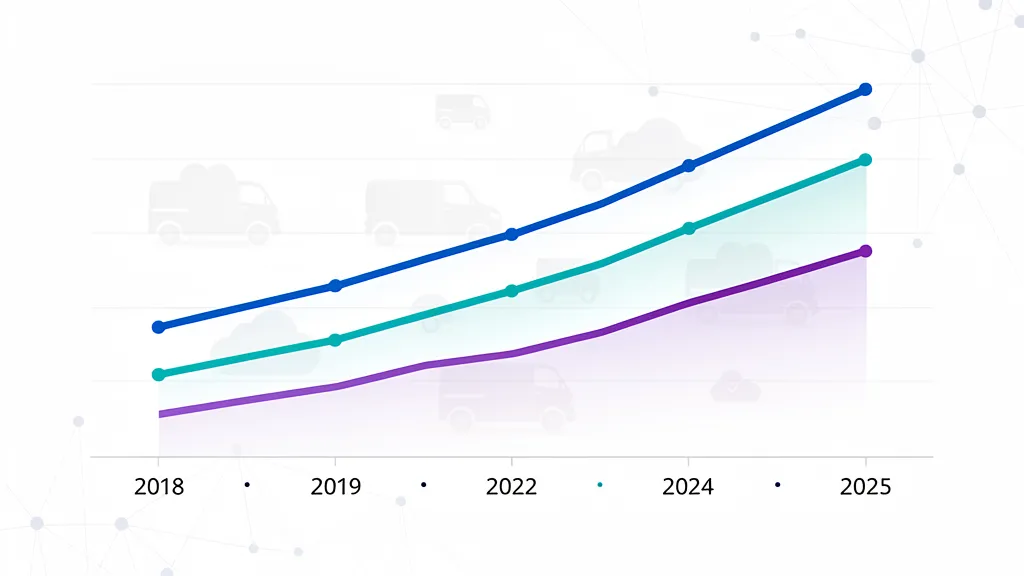
Industry reports from telematics providers and fleet consultants show clear trends:
- Predictive diagnostics is replacing reactive maintenance
- Cloud-based diagnostic platforms are becoming standard
- Regulatory pressure on emissions and safety reporting continues to increase
These trends suggest that diagnostic scanners are evolving into long-term data platforms5 rather than standalone tools.
Case Example: Downtime Reduction Through Diagnostics
A regional logistics fleet introduced a fleet-grade diagnostic scanner integrated with its maintenance system. Over twelve months, internal records showed:
- 28 percent fewer roadside failures
- Faster diagnosis and repair cycles
- Improved preventive maintenance planning
This pattern aligns with results reported across multiple fleet maintenance studies.
Common Mistakes to Avoid
Choosing Based Only on Price
Low-cost scanners often lack protocol coverage and update support. Fleets then replace them sooner, increasing overall cost.
Ignoring Update and Support Policies
Without updates, scanners fail to recognize new vehicle models or regulatory changes.
Overlooking Integration Planning
Diagnostic data loses value if it remains isolated on a single device. Integration planning should start early.
What Individual Drivers and Small Operators Should Look For
While fleets need advanced integration and analytics, individual drivers should focus on compatibility, ease of use, and update support. A scanner that simplifies diagnostics without professional training often delivers the best value for personal or small business use.
Frequently Asked Questions About Diagnostic Scanners for Fleet Vehicles
What is the best diagnostic scanner for fleet vehicles?
The best diagnostic scanner for fleet vehicles is one that fully supports your vehicle mix, provides live data access, and integrates with maintenance systems. For fleets, long-term software updates and data export capabilities are usually more important than upfront price.
Do fleet vehicles need a different diagnostic scanner than personal cars?
Yes. Fleet vehicles typically require broader protocol support, deeper diagnostics, and reporting features. Personal car scanners often focus on basic fault codes rather than preventive maintenance or compliance tracking.
How much should a fleet diagnostic scanner cost?
Costs vary by capability. Entry-level scanners may cost a few hundred dollars, while fleet-grade tools often involve higher upfront investment plus software subscriptions. Many fleets evaluate total cost of ownership6 over three to five years.
Can diagnostic scanners really reduce fleet downtime?
Yes. Studies from fleet maintenance and telematics providers show that preventive diagnostics can reduce unplanned breakdowns by more than 30 percent by detecting issues early.
What protocols should a fleet diagnostic scanner support?
Most fleets require OBD II or EOBD for light-duty vehicles and CAN or J1939 for heavy-duty trucks. Mixed fleets may also need manufacturer-specific protocols for full system access.
How often should diagnostic scanner software be updated?
Ideally, software should be updated several times per year. Frequent updates ensure compatibility with new vehicle models, changing regulations, and evolving diagnostic standards.
Is integration with fleet management software necessary?
Integration is not mandatory, but it significantly increases value. Connected diagnostic data improves reporting accuracy, trend analysis, and long-term maintenance planning.
What is the biggest mistake fleets make when choosing a diagnostic scanner?
The most common mistake is choosing based only on price. This often results in limited coverage, outdated software, and early replacement.
Conclusie
Choosing a diagnostic scanner for fleet vehicles is a strategic decision that influences uptime, safety, and cost control. By focusing on vehicle coverage, diagnostic depth, data integration, and long-term value, fleet managers can build a diagnostics strategy that supports both current operations and future fleet growth. A structured, data-driven evaluation process leads to better decisions and more resilient fleet performance.
Reference
-
This resource will explain fault codes and their role in diagnosing vehicle issues effectively. ↩
-
Understanding data integration can help you leverage diagnostic data for better decision-making. ↩
-
Find out the best practices for keeping your diagnostic tools up-to-date for optimal performance. ↩
-
This resource will clarify emissions compliance standards and their importance for fleet operations. ↩
-
Stay updated on the latest trends in data platforms that are transforming fleet diagnostics. ↩
-
This link will help you understand the long-term financial implications of your diagnostic scanner choices. ↩

 Dutch
Dutch  English
  Spanish
  Japanese
  German
  Arabic