
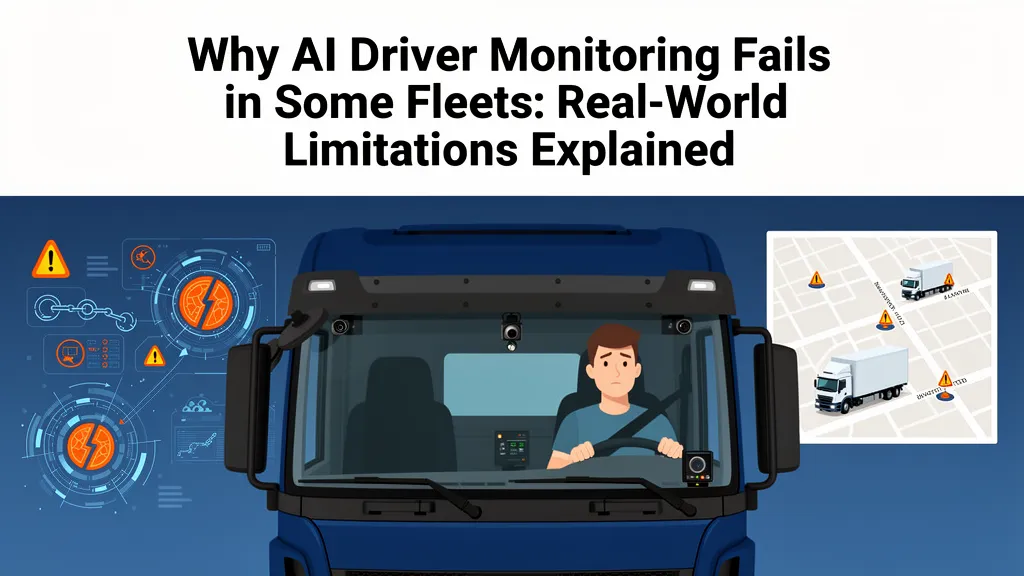
This article focuses on common reasons why AI driver behavior monitoring
fails to deliver expected safety improvements in some fleets.
For a complete overview of how AI driver behavior monitoring works,
its benefits, limitations, and deployment considerations,
see our main guide on AI Driver Behavior Monitoring for Fleet Safety & Risk Management.
Limitations and Real-World Deployment Constraints
AI driver behavior monitoring has become a key tool in modern fleet safety programs. When implemented well, it can improve risk visibility, reduce severe incidents, and support data-driven coaching.
However, not every deployment delivers the expected results.
In real-world fleet operations, some AI driver monitoring projects stall, underperform, or are abandoned entirely — not because the technology is ineffective, but because its limitations are misunderstood or ignored during selection and rollout.
This article explains where AI driver monitoring reaches its limits, why some fleets fail to see improvements, and how decision-makers should evaluate these constraints before large-scale deployment.
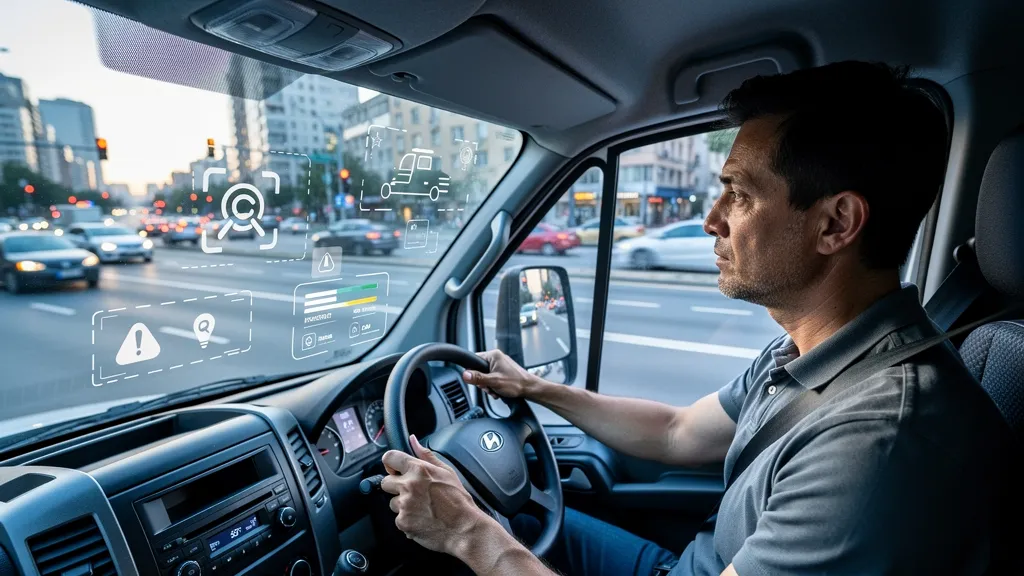
AI Driver Monitoring Is Not a Standalone Safety Solution
A common misconception is that AI driver monitoring can independently “fix” unsafe driving.
In practice, AI systems function as risk indicators, not decision-makers. They observe patterns — such as distraction cues, fatigue signals, or unsafe maneuvers — but they do not understand intent, accountability, or organizational context.
In multi-vehicle deployments, fleets that expect AI monitoring to replace safety leadership, training programs, or supervisory discipline often experience disappointing results within the first few months.
AI effectiveness depends on how well it is integrated into broader safety processes, not on detection capability alone.
Core Limitations of AI Driver Monitoring in Real-World Fleet Operations
1. Context Awareness Remains Limited
AI systems rely on visual and sensor inputs. They can detect observable behaviors such as head movement, phone usage, or lane deviation, but they struggle to fully interpret context.
Common real-world examples include:
- Drivers checking mirrors or navigation systems being flagged as distraction
- Temporary evasive maneuvers misclassified as aggressive driving
- Fatigue indicators triggered by lighting conditions, cabin glare, or facial features
These limitations do not necessarily indicate poor algorithms. They reflect the fundamental challenge of interpreting complex human behavior through sensors alone — especially across diverse vehicles and operating environments.
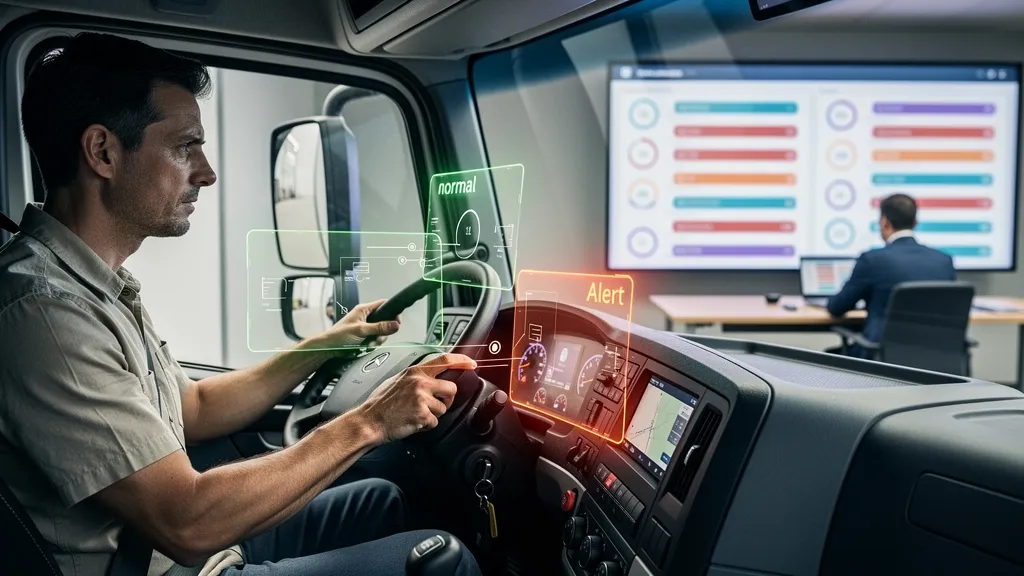
2. False Alerts Erode Trust Faster Than Missed Alerts
False alerts are one of the most common reasons fleets lose confidence in AI monitoring systems.
When alerts feel:
- Frequent
- Inconsistent
- Poorly explained
drivers begin to ignore them, and managers struggle to act on the data.
In large-scale deployments (often 50+ vehicles), fleets frequently report that alert trust erosion emerges within the first 30–60 days if thresholds, scenarios, and review processes are not adjusted.
For this reason, mature fleets treat false alerts as a configuration and governance issue, not merely a model accuracy problem.
3. Hardware Placement and Environment Matter More Than Specifications
AI performance is strongly influenced by deployment conditions, including:
- Camera angle and mounting height
- Cabin lighting and glare variability
- Vehicle vibration and road conditions
- Driver seating position and cabin layout
Two fleets using identical AI systems may see very different results simply due to differences in vehicle configuration and installation standards.
This limitation is often overlooked during procurement, where technical specifications receive more attention than real-world mounting consistency and environmental variability.
4. AI Monitoring Cannot Replace Human Judgment
AI driver monitoring can identify signals, but it cannot:
- Assess intent
- Understand situational stress
- Apply discretion or empathy
Without trained safety managers to interpret alerts, contextualize behavior, and communicate constructively with drivers, AI data quickly becomes noise.
Successful fleets treat AI monitoring as a decision-support tool, not an automated enforcement system.
Organizational and Deployment Constraints
Driver Acceptance Is a Limiting Factor
Even technically sound systems can fail if drivers perceive monitoring as:
- Surveillance rather than safety
- Punitive rather than corrective
- Opaque rather than explainable
Without transparent communication, clear policy alignment, and consistent messaging, driver resistance can quietly undermine the effectiveness of AI monitoring programs.
Data Without Process Has Limited Value
AI systems generate large volumes of behavioral data. Without:
- Defined escalation thresholds
- Coaching and review workflows
- Clear ownership for follow-up actions
fleets often struggle to translate insights into measurable safety improvements.
In these cases, the limitation lies not in detection capability, but in operational readiness and governance maturity.
When AI Driver Monitoring May Not Deliver ROI
AI driver monitoring may be less effective when:
- Fleet safety culture is immature
- Vehicle configurations are highly inconsistent
- Deployment is rushed without pilot testing
- Alert policies are copied rather than tailored
- No clear ownership exists for acting on insights
Understanding these conditions upfront helps fleets avoid unrealistic expectations and misaligned investments.
Fleets That Benefit Most — and Least — from AI Driver Monitoring
AI driver monitoring tends to deliver the strongest value in fleets with:
- Standardized vehicle cabins and installation practices
- Defined safety leadership and accountability
- Coaching-based, improvement-oriented safety cultures
Conversely, fleets may struggle to realize value when:
- Vehicle types and cabin layouts vary widely
- No post-alert review or coaching process exists
- Monitoring is positioned primarily as a disciplinary tool
Recognizing this distinction early helps decision-makers determine readiness, not just technical suitability.
How to Evaluate AI Driver Monitoring Limitations Before Deployment
Before committing to large-scale rollout, decision-makers should assess:
- Whether alert logic and thresholds can be customized
- How false alerts are reviewed, explained, and adjusted
- Installation standards across vehicle types
- Driver communication and training plans
- Integration with existing safety and risk management processes
Addressing these questions early significantly reduces the risk of deployment failure.
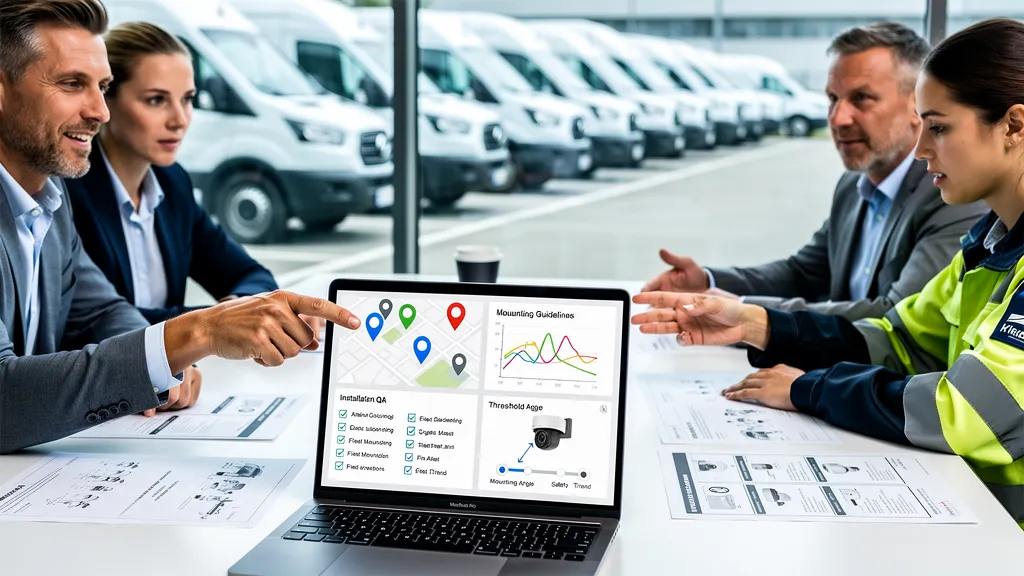
Limitations Do Not Mean AI Monitoring Is Ineffective
It is important to distinguish between technical limitations and*misaligned deployment.
In fleets where AI driver monitoring succeeds, limitations are:
- Acknowledged
- Actively managed
- Designed around
rather than hidden or ignored.
Understanding where AI monitoring works — and where it does not — is a critical step toward building sustainable, trust-based safety programs.
FAQ: AI Driver Monitoring Limitations
Is AI driver monitoring always accurate?
No. AI driver monitoring accuracy is context-dependent. Performance varies based on environment, camera placement, lighting conditions, and operational context. Accuracy improves with proper calibration and ongoing configuration.
Do false alerts mean the AI is unreliable?
Not necessarily. False alerts often reflect threshold settings, contextual ambiguity, or deployment conditions rather than algorithm failure.
Can AI monitoring replace safety managers?
No. AI supports decision-making but cannot replace human judgment, coaching, or accountability.
Is AI driver monitoring suitable for every fleet?
Not always. Fleets with limited safety processes or inconsistent vehicle setups may need foundational improvements before adopting AI monitoring.
Conclusion
AI driver behavior monitoring can significantly enhance fleet safety — but only when its limitations are clearly understood and operationally managed.
For fleet leaders, the critical question is not whether AI monitoring works in theory, but whether their organization is prepared to deploy it realistically, responsibly, and effectively.
Before large-scale rollout, fleets should evaluate not only system capabilities, but also the conditions under which AI monitoring may fall short — and how those constraints will be addressed in practice.
For many organizations, this evaluation begins with a limited pilot deployment and a clear definition of what success — and failure — look like before scaling.

 Arabic
  English
  Spanish
  Japanese
  German
  Dutch
Dutch